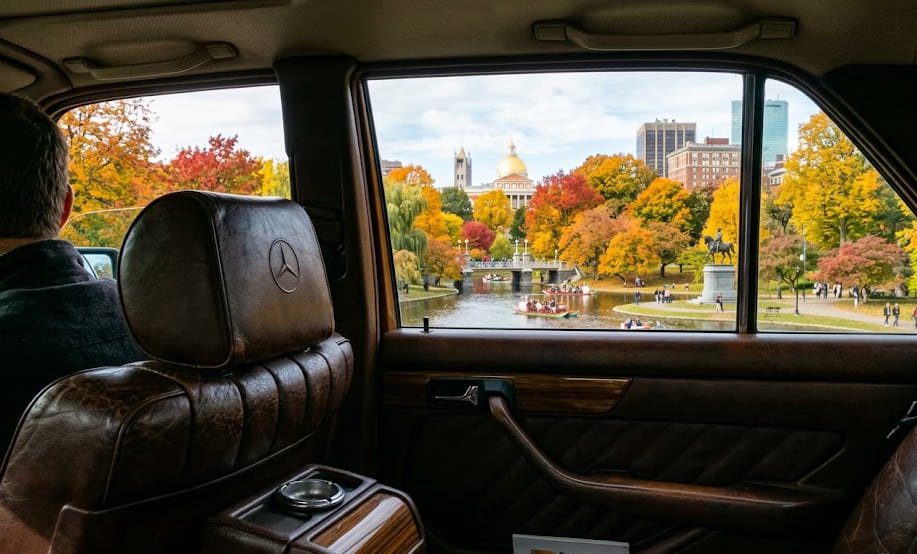
There is a particular kind of quiet that descends when you close the door of an old Mercedes sedan. It is not the engineered vacuum of a modern luxury car, with its active noise cancellation and acoustic glass layered like a bank vault. It is something older and more honest: the sound of a door that fits because a team in Stuttgart spent an unreasonable amount of time making sure it would. The thud is solid, but not theatrical. The latch engages with a mechanical certainty that asks nothing of you. And then there is silence—not the absence of noise, but the presence of restraint.
That silence is the beginning of an argument I have been turning over for years: that the old Mercedes sedan, particularly the models built between the early 1960s and the late 1980s, remains more civilized than almost any luxury car produced today. This is not nostalgia. Nostalgia mistakes familiarity for quality. This is an observation about what civilization actually requires from a machine.
The Three Foundations of Automotive Civility
Civility, applied to an automobile, is not about softness. It is not about ride comfort alone, though that is part of it. It is about a car's relationship to the world it moves through and the people it carries. A civilized car does not impose itself on a street. It does not interrupt a conversation. It does not treat the driver like a component in a system, or a pedestrian like an obstacle to be warned away. It enters, travels, and departs with a kind of grace that leaves the environment slightly better than it found it.
The old Mercedes sedan achieved this on three foundations that have largely collapsed in modern luxury design.
Proportion as a Moral Commitment
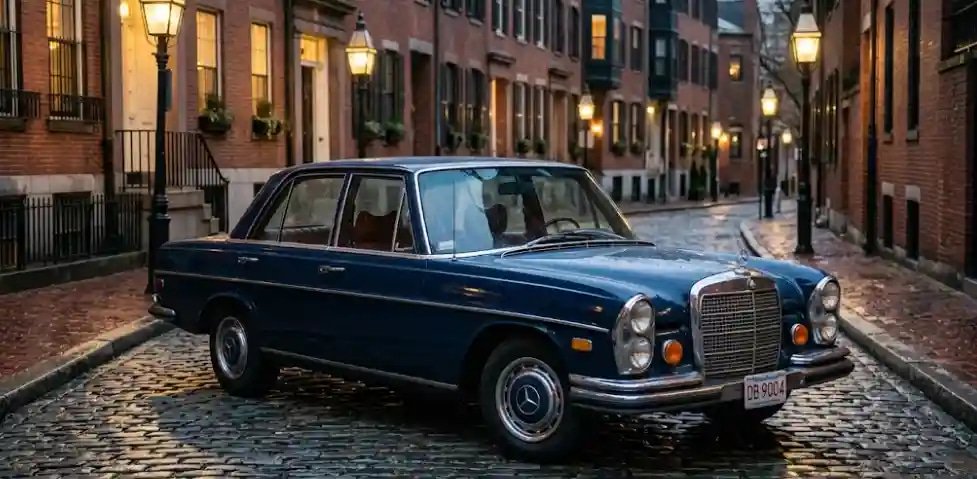
Look at a W111, a W116, or a W126 from any angle, and what strikes you first is the absence of visual anxiety. The grille is vertical, upright, and scaled to a human face. The hood is long enough to convey purpose, but not so long as to caricature it. The greenhouse is tall and generously glazed—not for fashion, but because passengers were expected to see the world, not be shielded from it. The rear end does not taper dramatically, does not squint, does not try to suggest speed while standing still.
These cars stood for something: arrival, not acceleration. The proportion said that whoever was inside had already made their point. The modern luxury sedan, by contrast, often looks like it is still trying to make one.
Table: Proportions That Signal Civility vs. Aggression
Design Element | Old Mercedes Sedan (Civilized) | Modern Luxury Sedan (Aggressive) |
|---|---|---|
Grille | Vertical, integrated, proportionate | Oversized, isolated, confrontational |
Greenhouse | Tall, airy, outward-looking | Low, chopped, fortress-like |
Rear treatment | Resolved, calm, horizontal | Pinched, aggressive, light-barred |
Wheel size | Modest, comfort-oriented | Oversized, tire-thin, impact-focused |
Overall stance | Planted, patient | Crouched, tense |
These are not merely aesthetic choices. They are signals about how the car expects to be used, and what it thinks of everyone outside it.
Material Integrity as an Ethical Position
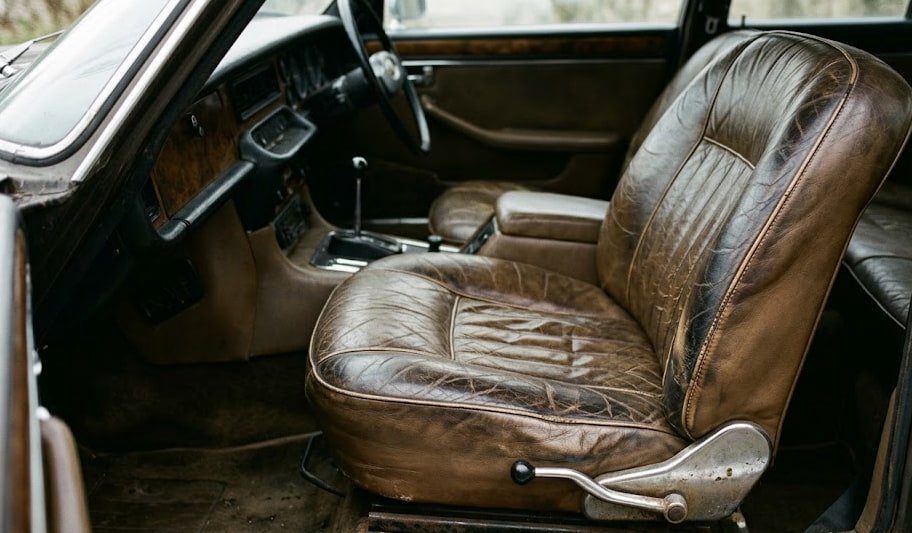
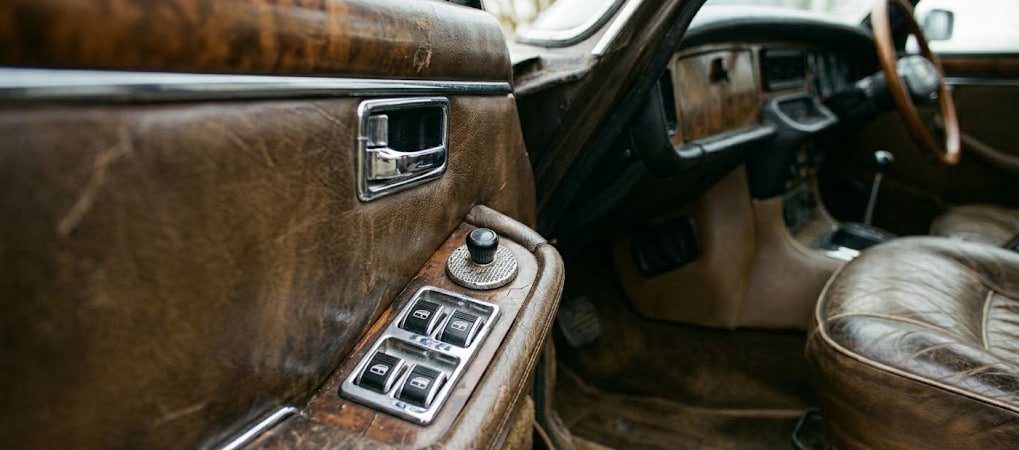
The old Mercedes interior was not luxurious in the modern sense. It was not filled with soft-touch polymers molded to look like stitched leather. It was not covered in piano black. It was, instead, filled with materials that were exactly what they appeared to be. If it looked like wood, it was wood—a single sheet of zebrano or burled walnut, matte-finished, cut to fit the dashboard with the precision of cabinetry, because it was cabinetry. If it looked like chrome, it was metal, cool to the touch in winter and warm in summer, and it would still be metal forty years later.
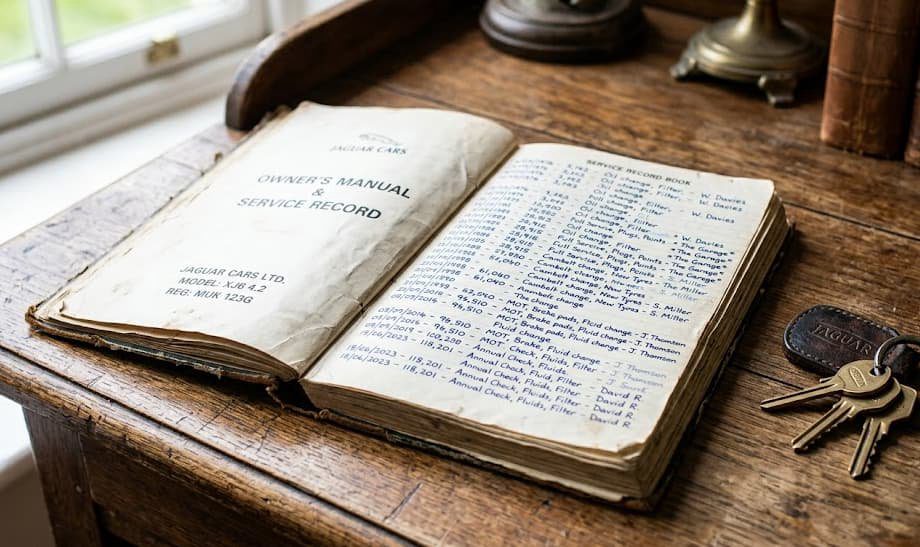
This material integrity carries an ethical weight. It is honest. And honesty, in a machine that costs as much as a house did, is a form of respect. The manufacturer is saying: you paid for substance, and we are giving you substance, not a simulation of it. When you sit in an old Mercedes, you are sitting in a space built by people who assumed you would keep the car long enough to notice what they had done.
Compare this to the average modern luxury cabin, where materials are optimized for the showroom—attractive at first touch, but destined to delaminate, creak, and embarrass within the span of a single lease. The old car's cabin was not designed to seduce you on a test drive. It was designed to accompany you through a decade.
Cabin Silence as a Form of Respect
And then there is the silence. Not acoustic isolation as a technological flex, but silence as a design philosophy. The old Mercedes sedan did not try to erase the outside world. It simply asked the outside world to speak more quietly. Wind noise was managed by honest aerodynamic shaping. Engine noise was present, but distant—a low, industrious murmur that communicated effort without performing it. The cabin was quiet enough that conversation could happen at normal volume, quiet enough that you could hear the rain on the roof without it becoming an intrusion.
This kind of silence leaves room for thought. The modern luxury car, in pursuit of ever-lower decibel readings, has created a different kind of environment entirely: a sensory deprivation chamber punctuated by synthesized engine sounds, notification chimes, and the persistent glow of screens. It is quiet in the way an anechoic chamber is quiet—unnaturally, oppressively so. The old Mercedes was quiet in the way a library is quiet. There is a difference, and it matters.
The Confidence to Stop Trying
Underpinning all three of these—proportion, material integrity, cabin silence—was a deeper quality that is almost entirely absent from modern luxury automobiles. The old Mercedes sedan was built by a company that was confident in what it was making, and confident in the customer who would buy it. It did not need to shout, seduce, or startle. It did not need to change its grille every two years. It did not need to install a hyperscreen to prove it was modern. It was modern in its engineering, but it did not feel the need to look like the future. It simply looked like itself.
That confidence has a name, though it is rarely used in automotive circles now: dignity. The old Mercedes had dignity. And dignity, once lost, is very hard to reclaim.
Modern luxury cars are terrified of being seen as outdated. So they overcompensate. They add screens. They add light strips. They add grille shutters that open like a camera aperture. They add synthesized soundtracks that growl and pop on command. These are the gestures of machines that do not trust their own value. They demand attention because they cannot bear the thought of not receiving it. The old Mercedes kept attention by withholding just enough—by being slightly more restrained than it needed to be, slightly better-built than the warranty required, slightly more considerate than the market demanded.
That is civilization. Or it was.
Driving One Now
I am not arguing that old Mercedes sedans are perfect. They are slow by modern standards. Their fuel consumption is frankly sinful. They require maintenance from people who know what a mechanical fuel injection system is, and those people are growing rarer. But none of that diminishes the core observation: that when you drive one today—down Beacon Street in November, say, with the heater pushing warmth through vents that click satisfyingly into place—you feel more civilized than you do in any contemporary equivalent. You feel less hurried, less marketed to, less surveilled by your own dashboard. You feel like a person in a machine, not a user in an interface.
And that feeling, I have come to suspect, is what luxury was always supposed to provide. Not isolation from the world, but a certain quality of presence within it. Not the removal of effort, but the quiet dignity of effort done well. Not attention, demanded. But attention, earned and held, long after the car has rolled out of view.