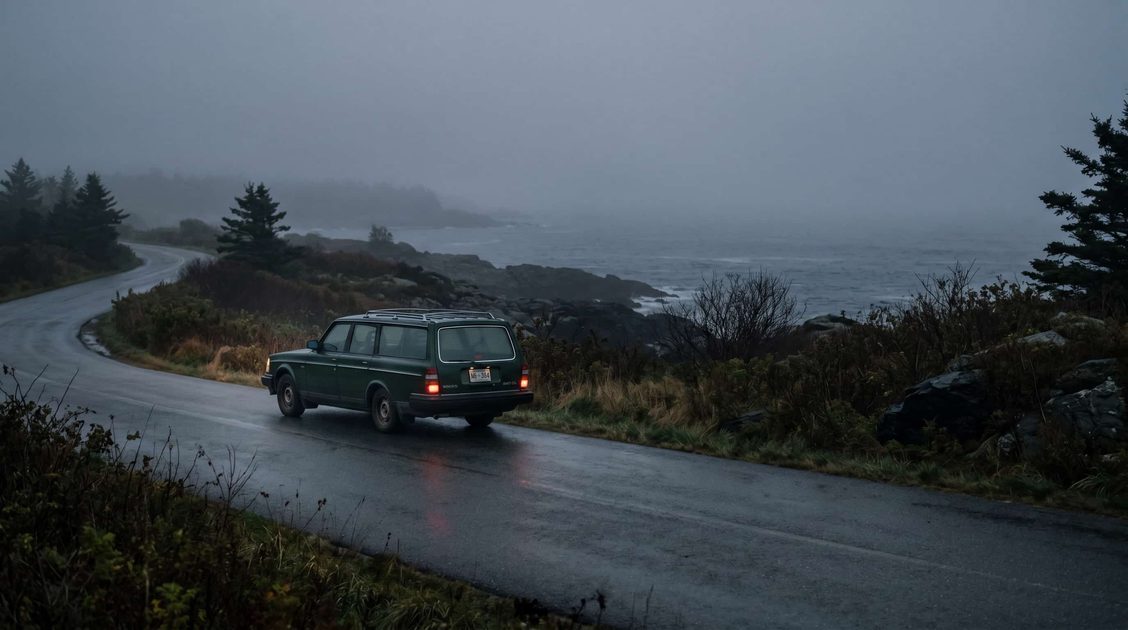
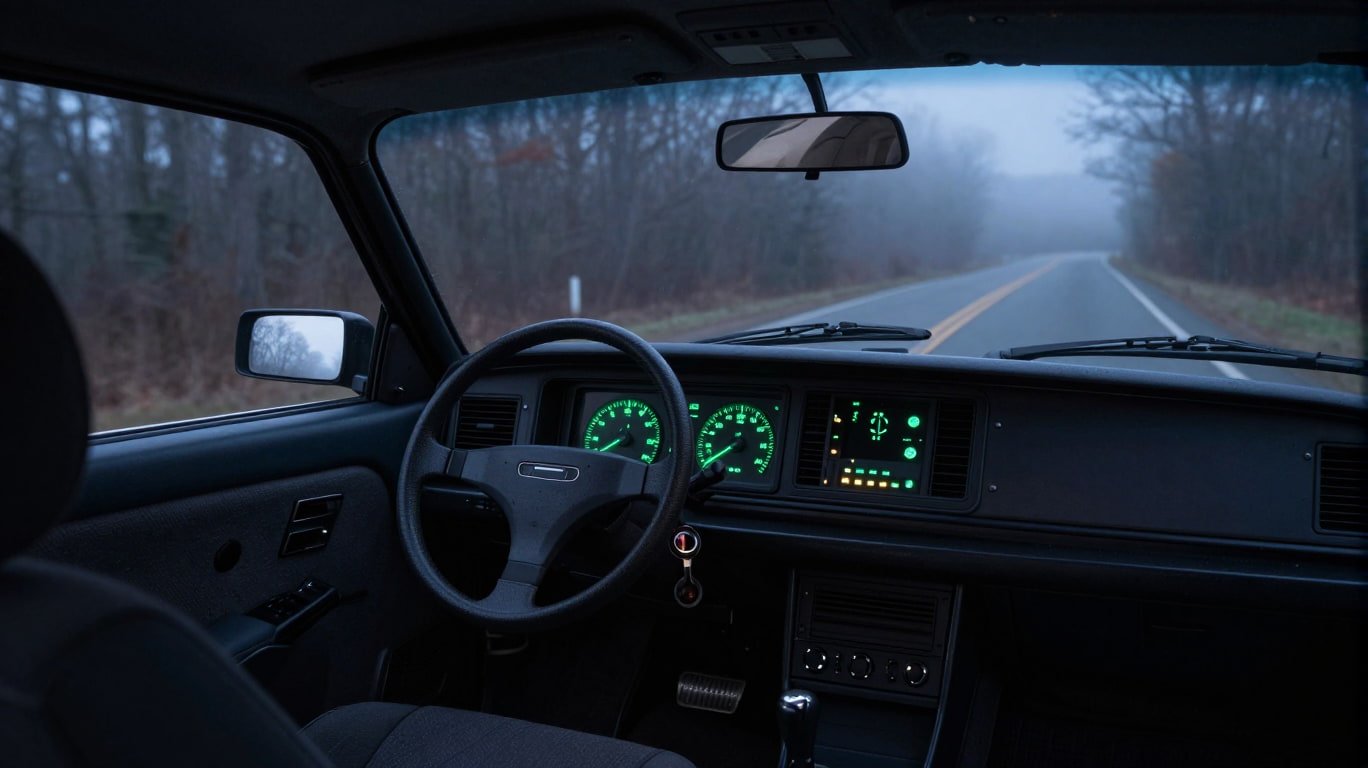
There is a moment, familiar to anyone who has spent enough time in the right kind of car, when the cabin stops being a space you occupy and becomes a space that occupies you. The door closes. The engine catches. And something in your shoulders, something you were not fully aware you were holding, releases. The car is not moving yet. It has done nothing except welcome you. But already the mind has begun to downshift.
This is not about comfort. Comfort is a physical condition—adequate lumbar support, a seat heater that works, suspension that absorbs rather than reports. What I am describing is something deeper: a psychological quiet that only certain cabins produce, and that most modern automotive interiors, for all their technology and opulence, actively prevent.
A good cabin should quiet you down. That is its first responsibility. Before it entertains you, before it informs you, before it connects you to anything, it should create conditions in which a scattered mind can gather itself. If it fails at this, nothing else it does matters.
The Three Elements of a Quieting Cabin
After years of driving cars old and new, I have identified three elements that separate cabins that settle the mind from cabins that scatter it. They are not complicated. But they are remarkably rare.
The View Outward
The first thing a cabin must do to quiet you down is remind you that you are in the world, not in a simulation of it. This sounds obvious. It is not.
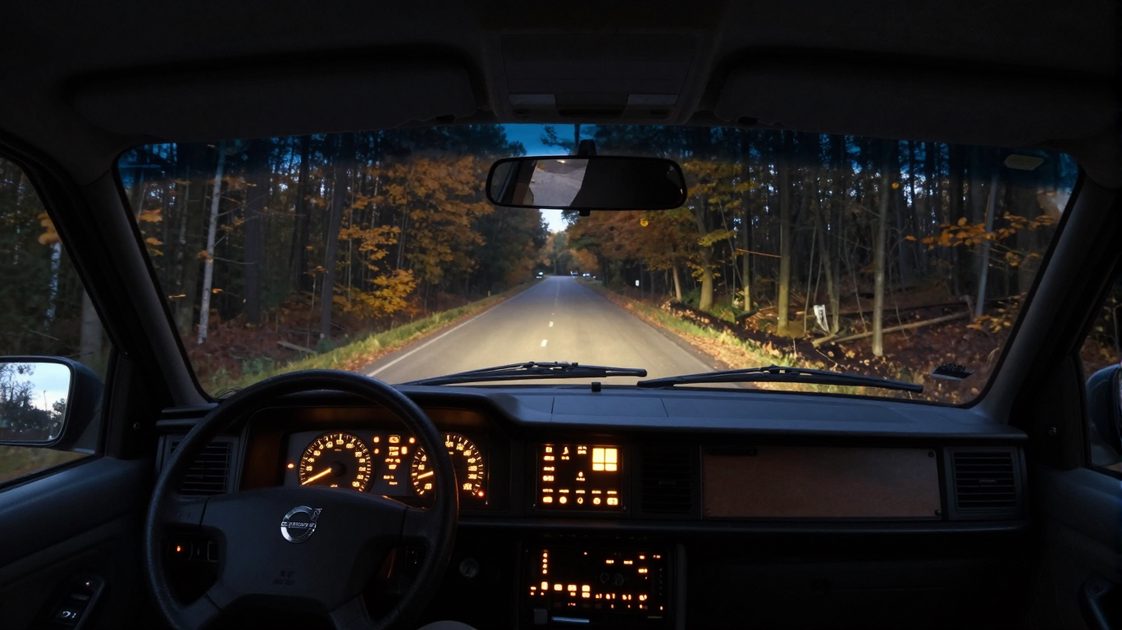
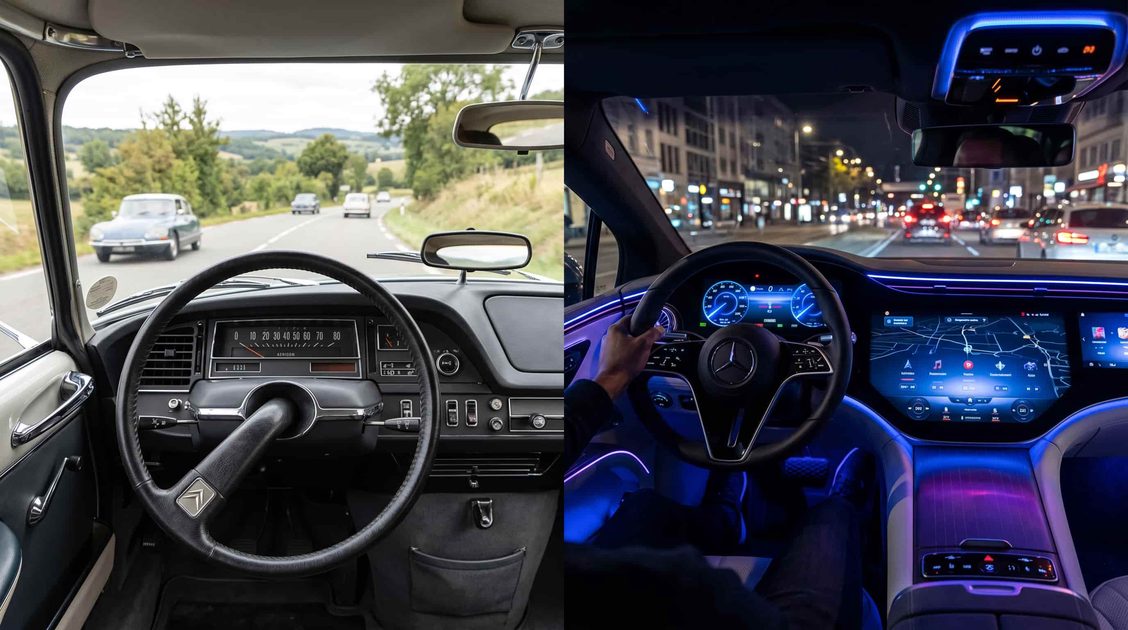
The old Saabs, the old Volvos, the old Mercedes sedans—these cars were designed with greenhouses that prioritized vision. Thin A-pillars. Low beltlines. Large, flat side glass. A dashboard that sat well below the driver's eyeline, rather than rising up to create a "cockpit feel." The result was a sense of transparency. You could see the road, the trees, the oncoming weather. You were inside the car, but you were not sealed off from existence.
This mattered psychologically. A wide, clear view of the world has a calming effect. It reduces the subliminal tension of being surrounded by blind spots. It reminds you that you are moving through a landscape, not through a video game. The modern crossover, with its gun-slit windows and beltline that rises to shoulder height, does the opposite. It fortresses you in, and the body responds accordingly—with a low-grade vigilance that never quite subsides.
The Language of Materials
The second element is tactility. A quieting cabin is made of materials that want to be touched, and that reward the touching. Not because they are expensive, but because they are honest.
Wool upholstery, of the kind found in old Saabs and base-model Volvos, has a warmth that leather cannot replicate. It breathes. It grips you gently in a corner without being sticky. It does not crackle in the cold. A thin-rimmed steering wheel, wrapped in leather that has been polished by a decade of hands, communicates road texture without numbness. A Bakelite radio knob offers a click that lands in the fingertip like a small, satisfying fact. These are not luxuries. They are presences.
Table: How Materials Shape Cabin Psychology
Material & Surface | Common in Older Cabins | Common in Modern Cabins | Effect on the Driver |
|---|---|---|---|
Dashboard surface | Flat, matte, low-reflection, often padded or textured | Glossy piano black, curved, screen-dominated | Older: eyes rest. Modern: eyes flicker. |
Switchgear | Knurled knobs, toggle switches, sliders with detents | Capacitive touch panels, haptic-feedback plastic | Older: fingers know what happened. Modern: fingers doubt. |
Upholstery | Wool, velour, uncoated leather with visible grain | Coated leather, synthetic perforations, Alcantara accents | Older: warmth and grip. Modern: uniformity and slip. |
Trim | Open-grain wood, unvarnished and matte; brushed metal | High-gloss veneer, chrome-effect plastic, carbon-fiber inlays | Older: substance. Modern: simulation. |
Floor covering | Thick loop carpet, rubber mats with deep ridges | Short-pile carpet, often thin and molded | Older: absorption. Modern: reflection. |
The difference between these two columns is the difference between an interior that invites you to settle in and an interior that keeps you slightly on edge, slightly aware that things are not quite what they seem. A fake material never quiets the mind because the mind, somewhere below consciousness, knows it is being lied to.
The Discipline of Shadow
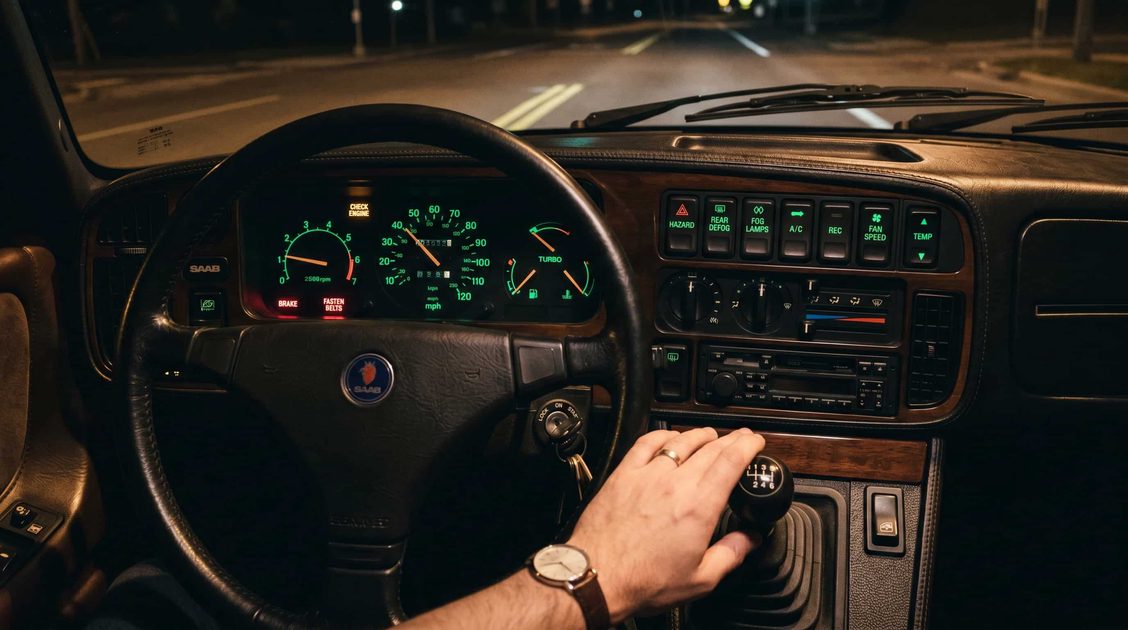
The third element is the hardest to describe, because it is about what is not there. I call it the discipline of shadow: the willingness of a cabin to leave parts of itself in darkness.
Old car interiors were lit with intention. The instrument cluster glowed—amber, green, or a soft white—and the center stack had a few small lights for the climate controls. Everything else was dark. The passenger footwell was dark. The door pockets were dark. The back seat, at night, was a cave. This was not a cost-cutting measure. It was a psychological design choice that modern manufacturers seem to have entirely forgotten.
Darkness in a cabin is not an absence. It is a presence. It wraps around you. It reduces visual noise. It tells the peripheral vision that there is nothing to process, no alert to attend to, no surface reflecting the glow of a screen. The mind, freed from constant low-level visual demands, is permitted to wander or to rest.
The modern cabin has abolished shadow. Ambient light strips trace the door panels. Footwell LEDs wash the carpet in violet or cyan. The central screen emits a permanent glow, and even when dimmed, it never fully sleeps. The cumulative effect is a low-grade sensory assault. The cabin is never dark. It is never quiet. It is always performing its modernity, and in doing so, it robs you of the very thing a cabin should provide: a place where the eyes can stop working.
What the Screen Took
No discussion of the quieting cabin can avoid the central fact of modern automotive interior design: the screen. I do not mean screens as a category—a simple GPS display is useful, and a digital instrument cluster can be done tastefully. I mean the screen as the organizing principle of the cabin, the thing around which all other design decisions must genuflect.
When the screen becomes the cabin's center of gravity, several things happen, none of them calming.
First, the dashboard rises. It must. A screen positioned low in the center stack is uncomfortable to glance at; the modern solution is to elevate it, tablet-style, above the dash. This immediately erodes the outward view that older cabins protected so carefully. The screen sits in your eyeline, or just below it, a persistent rectangle of light asking for your glance.
Second, physical controls disappear. Functions that were once operated by feel—temperature, fan speed, volume, defrost—migrate into submenus. What was a single click becomes a glance-and-touch sequence. Every interaction now requires visual attention, and visual attention is the opposite of a quiet mind.
Third, the screen never stops offering. Navigation, music, phone, vehicle settings, weather, nearby charging stations, traffic alerts. It is a device designed to never be finished. And a cabin that is never finished is a cabin that never lets you go.
An Argument for Retreat
I am not a Luddite. I do not believe that the correct answer to automotive interior design is to simply rewind the tape to 1972 and freeze it there. Safety structures have thickened pillars for legitimate reasons. Sound insulation has improved. Seats are objectively better at protecting the spine in a collision.
But the pursuit of a quieting cabin does not require rejecting progress. It requires asking a question that almost no manufacturer is asking: What does this space do to the person inside it?
Does it lower the heart rate? Does it allow the eyes to rest? Does it reward touch with honesty? Does it leave enough shadow for the mind to wander? These are not subjective indulgences. They are measurable effects of a space on a nervous system. And by these measures, a Volvo 240 from 1983 is more successful than almost any luxury sedan built today.
The good cabin is a retreat. Not an escape from the world—an escape suggests cowardice. A retreat suggests strategy: a temporary withdrawal for the purpose of returning with more order than you left with. The right car, on the right road, at the right hour, can perform this function better than any room in a house. It moves. It changes the view. It occupies the hands just enough to still the mind, but not enough to fatigue it. It is, at its best, a form of meditation for people who would never use that word.
This is what I mean when I say a good cabin should quiet you down. Not sedate you. Not numb you. Quiet you: turn down the volume of everything that is not necessary, so that what remains can be heard clearly.
A Personal Note
I keep a small list of cabins that have done this for me. The Saab 900 Turbo I drove through a Massachusetts November, the ignition between the seats like a small act of defiance. A Mercedes W123 with blue MB-Tex and a crack in the dash that had been there so long it felt like a feature. A base-model Volvo 240, the one with no tachometer and seats upholstered in fabric that looked like it belonged in a public library. None of these were expensive cars. None of them were fast. All of them, in their own way, made me quieter than I had been when I got in.
I do not drive cars to be seen driving them. I drive to settle something that gets unsettled by the noise of daily life. The cabin is the only room in the world that moves while you sit still. That is a strange and powerful thing. It deserves to be designed with more care than it currently receives.