
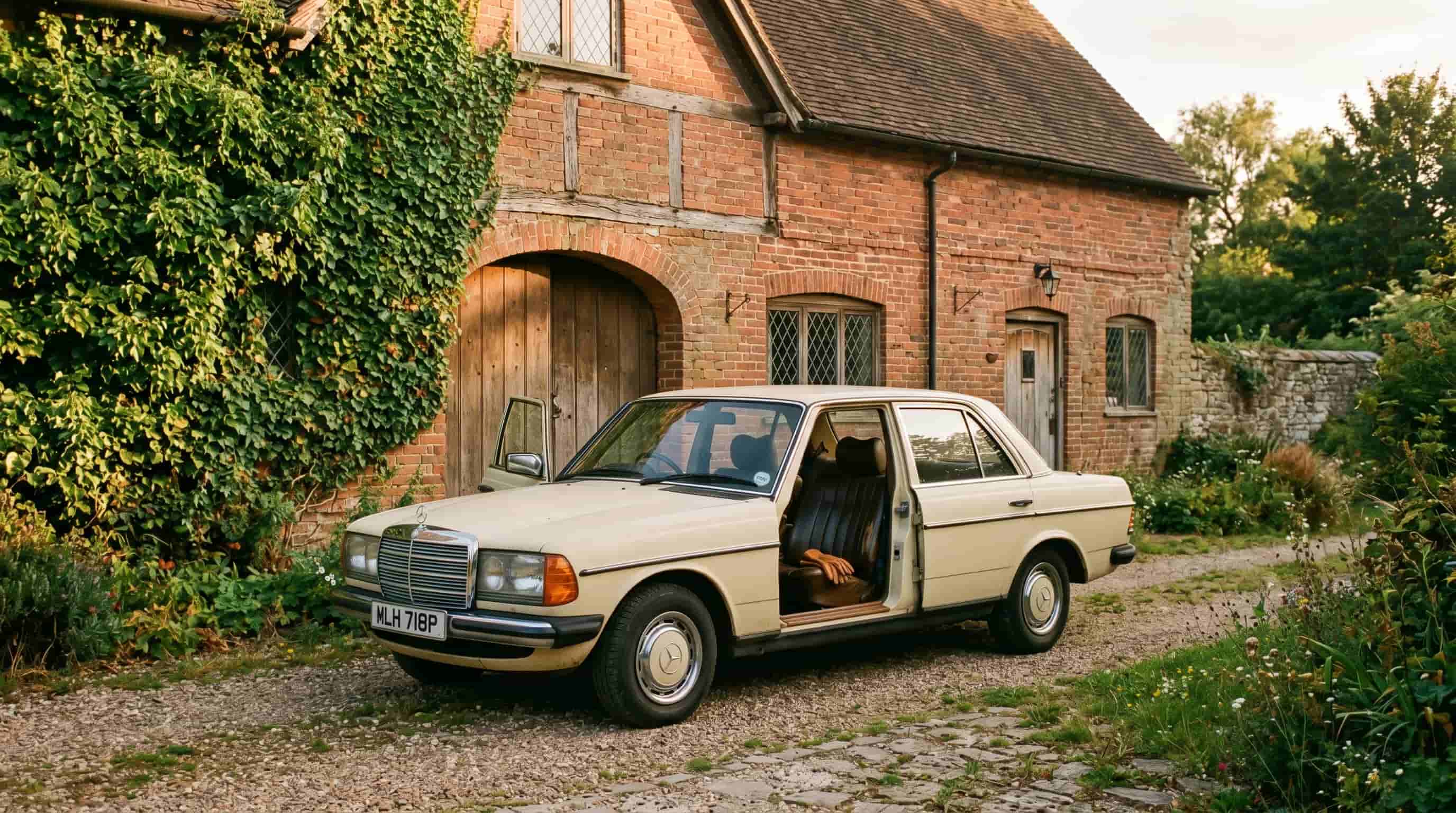
The car did not belong to my father. It did not belong to anyone I am related to. I bought it from a man in New Hampshire whose name I wrote down and have since misplaced, on a Tuesday in March when the cold was beginning to relent and the roads were still white with salt. It was a transaction. Money changed hands. A title was signed. The car became mine in the legal sense, which is the least interesting sense in which a car can become yours.
And yet, from the first week, the car felt like an inheritance. Not a purchase. Not an acquisition. Something that had been kept for me, by people I would never meet, and now passed quietly into my care. The feeling was not rational. I did not talk myself into it. It emanated from the machine itself—from the worn driver's bolster, the owner's manual annotated in a hand I did not recognize, the small scratch on the ashtray lid that someone had tried to polish out and then, wisely, left alone.
This essay is about that feeling. Why certain cars communicate inheritance across owners. What design, material, and construction have to do with it. And why the sensation of being a custodian rather than a consumer is one of the most valuable experiences an automobile can provide.
The Sensation of Continuity
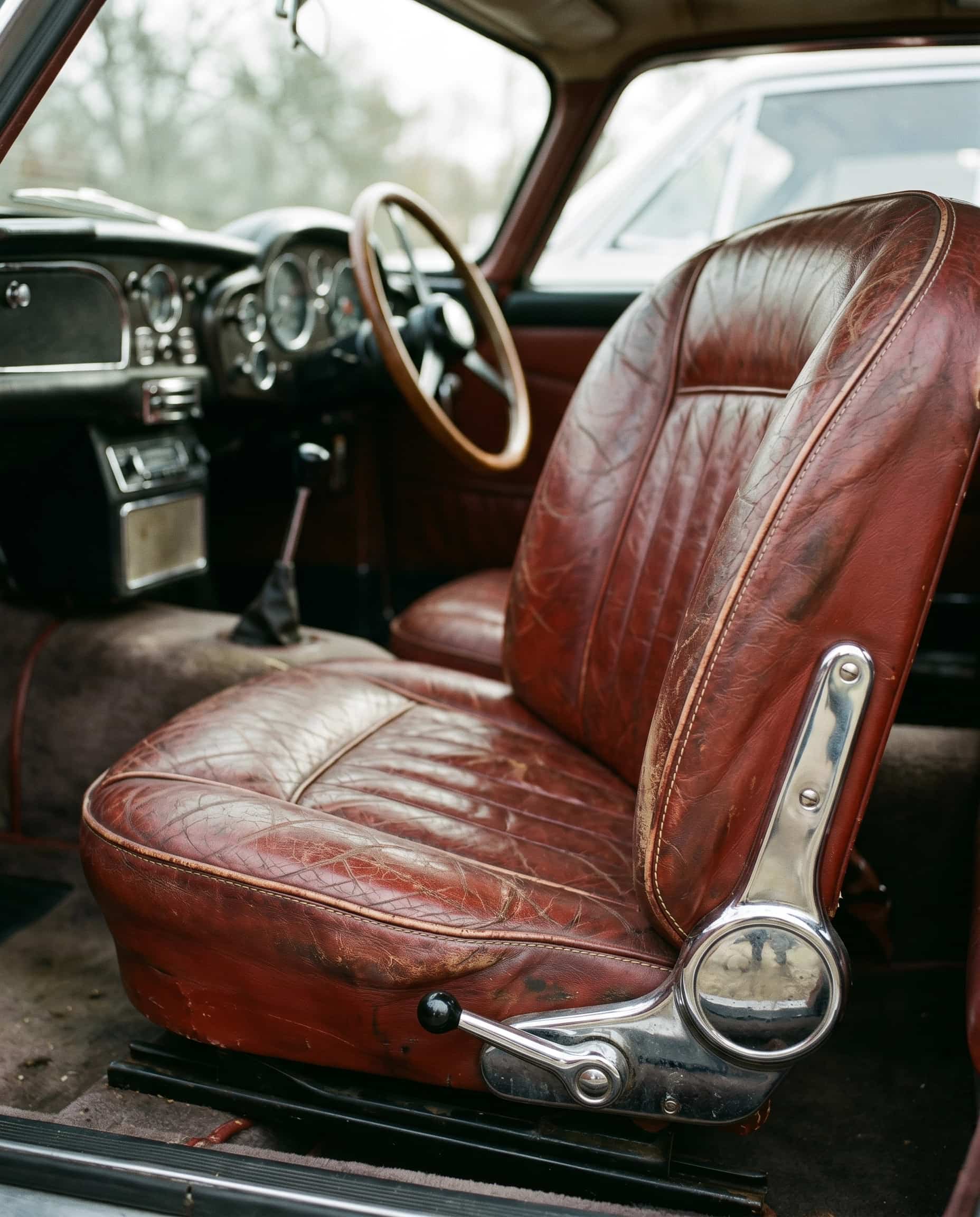
The cars that feel inherited share a quality that is easier to recognize than to name. It is not age. Many old cars feel merely old. It is not patina, though patina is part of it. It is something closer to continuity: the sense that the car has been moving through time in a straight, unbroken line, and that you have stepped into that line rather than started a new one.
A car that has been bought and sold rapidly, flipped between dealers, and treated as an asset feels discontinuous. Its history is a series of interruptions. The documents may show a chain of ownership, but the car itself does not carry the marks of steady, continuous care. The driver's seat has been replaced or badly re-covered. The service book is missing. The original tool kit is long gone. The car is not an inheritance. It is a survivor.
A car that has been kept—by one owner for decades, or by a sequence of owners who each understood themselves as temporary stewards—feels different. The wear is even and honest. The documentation is present, sometimes handwritten. The small, unglamorous parts that tend to go missing—the wheel chock, the first-aid kit, the original spare key—are still in place. The car communicates that it has been looked after, not merely maintained.
This communication is not sentimental. It is physical. You can feel it in the way the door closes, the way the gear lever moves through its gate, the way the controls still have the weight they were designed to have. A car that has been kept feels kept. A car that has been traded feels traded. The difference is immediate.
Design That Anticipates Succession
Some cars are designed to be consumed. They are styled for the showroom, engineered for the lease cycle, and built from materials that will look acceptable for thirty-six months and deteriorate shortly thereafter. They are not made to be inherited because the manufacturer does not expect anyone to want to inherit them.
Other cars are designed with succession built into their DNA. They were engineered on the assumption that someone would still be driving them in twenty, thirty, or forty years. This assumption shaped every material choice, every service procedure, every design decision about how parts would wear and how they could be replaced.
The Mercedes-Benz W123 is the textbook case. It was over-engineered by the standards of its day and nearly absurd by the standards of ours. The steel was thick. The door hinges were milled from solid metal. The interior plastics—a common failure point on modern cars—were made from materials that remained flexible and intact for decades. The service procedures were documented with the kind of thoroughness that assumed the mechanic would be a person, not a dealership computer. A W123 could be maintained indefinitely by a competent owner with a set of wrenches and a willingness to read.
The result is that W123s are still on the road in numbers that no contemporary rival can match. They have been passed from owner to owner, generation to generation, not because they are collectible but because they refuse to stop. They were built for succession. They feel inherited because they were designed to be.
Material That Ages Into Trust
The materials used in a car determine whether it will age or merely decay. Ageing is a process of improvement: the leather softens, the wood darkens, the chrome takes on a slight haze that is warmer than the original polish. Decay is a process of failure: the clear coat peels, the plastic becomes brittle, the fabric fades to an ugly approximation of its original color.
Cars that feel inherited are made from materials that age. The leather in a well-kept Jaguar XJ6 does not crack. It acquires a fine network of creases, like the cover of a book that has been read many times. The wood in a Rover P6 does not delaminate. It deepens in color, the grain becoming more pronounced. The chrome on a Mercedes W111 bumper does not flake. It dulls to a soft, pewter-like lustre that is more attractive than the hard shine of new chrome.
These materials communicate time without communicating neglect. They tell you that the car has been used, and that the use has made it better. This is the essential quality of an heirloom. An heirloom is not an object that has been preserved in a vacuum. It is an object that has been lived with, and whose living-with has produced a surface that cannot be replicated by any factory.
Table: Materials That Age vs. Materials That Decay
Material | Ageing Behavior | Decay Behavior | Common in |
|---|---|---|---|
Uncoated leather | Creases, darkens, develops sheen at contact points | Cracks, peels, tears at seams | Older Jaguars, Mercedes, Volvos |
Open-grain wood | Darkens, grain becomes more pronounced | Delaminates, veneer lifts, finish clouds | Rover, Jaguar, older Mercedes |
Solid chrome | Dulls to a warm haze, polishes back easily | Pits, flakes, reveals base metal beneath | Pre-1980s European cars |
Wool upholstery | Wears smoothly, pills slightly, remains warm to touch | Rots, attracts moths, holds moisture | Older Saabs, base-model Volvos |
Painted metal dashboards | Fades evenly, develops a subtle texture | Rusts from edges, paint chips in large sections | Citroën DS, Facel Vega |
Soft-touch plastic | (Does not age; moves directly to decay) | Becomes sticky, peels, reveals hard substrate beneath | Modern luxury cars, 2000s German interiors |
The Custodian's Posture
There is a difference between owning a car and keeping a car. Owning is a legal condition. Keeping is a moral one. The keeper understands that the car was there before them and will, if they do their part, be there after them. The keeper's relationship to the machine is not that of a consumer to a product but that of a custodian to a trust.
This posture changes the way you drive, maintain, and modify a car. The keeper does not cut the dashboard to install a modern stereo. The keeper repairs the original unit or learns to live without it. The keeper does not re-trim the interior in a different color because the current color is unfashionable. The keeper repairs the original upholstery, or replaces it with identical material sourced after months of searching. The keeper does not chase performance modifications that will strain components designed forty years ago. The keeper preserves the engineering balance that the manufacturer intended.
This sounds restrictive. In practice, it is liberating. When you accept the role of custodian, you are freed from the pressure to improve, update, or personalize. Your job is not to make the car yours. Your job is to keep the car itself. The car's identity is already complete. You are merely its current chapter.
Why the Feeling Matters
The feeling of inheritance matters because it changes the quality of ownership. A car that feels like a purchase is a possession. A car that feels like an inheritance is a relationship. The possession can be replaced. The relationship cannot, because the relationship is specific to the machine and the time you have spent with it.
A possession is measured by what it cost. A relationship is measured by what it has witnessed. The W123 that carried a family through a decade of road trips, the Saab 900 that took a graduate student through a Minnesota winter and never failed to start, the Volvo 240 that was already old when it was bought and is now older and still running—these cars are not valuable because of their market price. They are valuable because they have become part of a story, and the story includes the people who kept them before you.
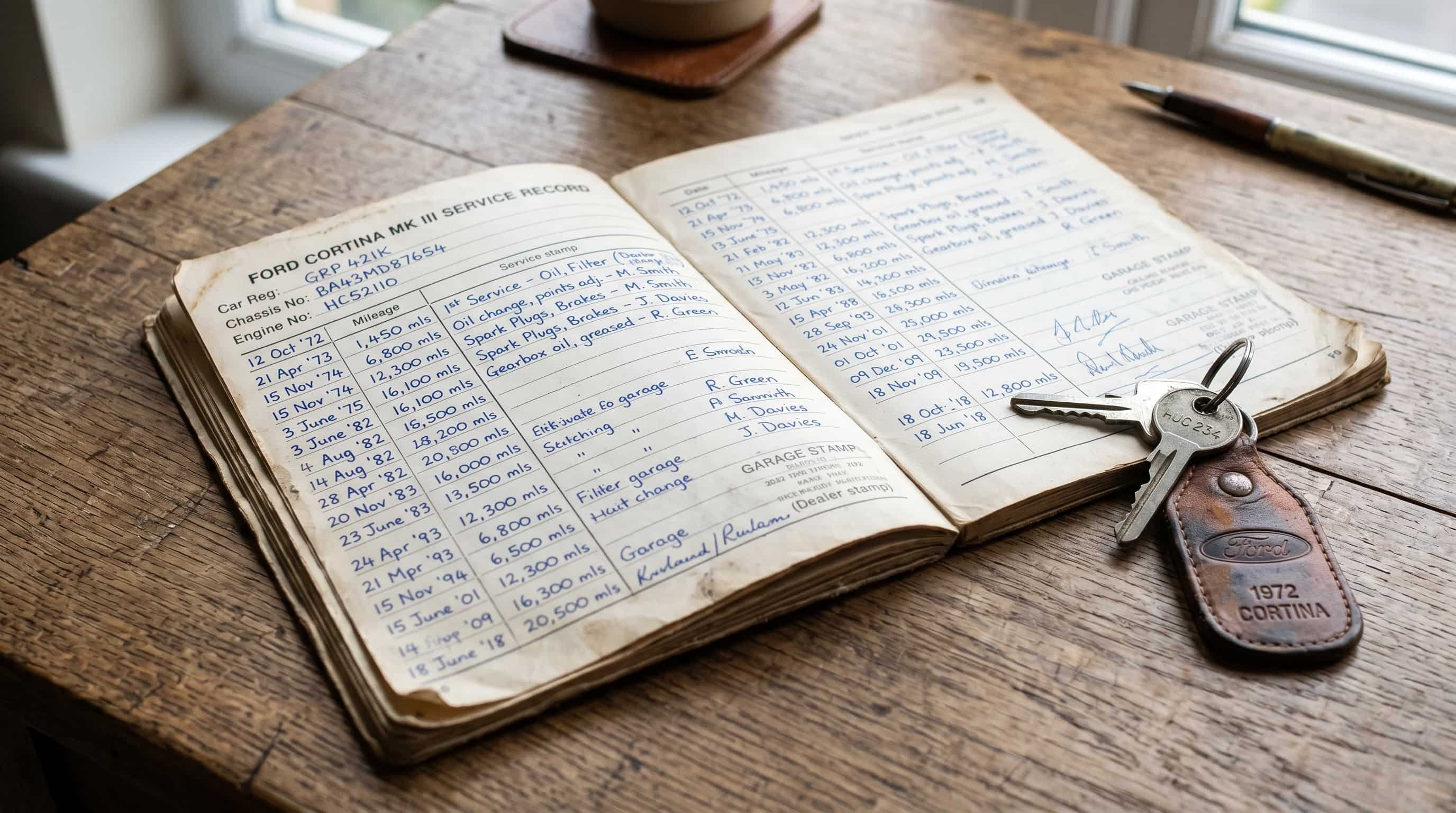
When I bought that cream-colored Mercedes from the man in New Hampshire, I was not thinking about inheritance. I was thinking about cam timing and rust repair and whether the heater blower worked on all three speeds. But within a month, the car had begun to communicate something else. The service book, which the seller had handed over in a plastic sleeve, contained entries in four different handwritings. The first entry was from 1979. The car had been kept by at least four people before me, and each of them had cared enough to write down what they had done and when they had done it.
I did not feel like the fifth owner. I felt like the fifth custodian. The car had been entrusted to me, not sold to me. And that feeling, once it arrived, made every drive feel less like a journey and more like a continuation.