
The first thing you see when you sit in a car is not the road. It is the dashboard. Before the engine starts, before the scenery moves, before the drive begins to unfold, the dashboard is there—an uninterrupted surface of intention, stretching from door to door, telling you what the car believes is important.
This is not a metaphor. It is a fact of design. Every dashboard is an argument about what the driver needs to know, deserves to feel, and is capable of understanding. The size of the instruments, the hierarchy of the information, the materials chosen for the surfaces, the presence or absence of ornament, the angle of the center stack, the weight of the knobs—these are not neutral decisions. They are value judgments made physical. A dashboard is, in the most literal sense, a moral document. It records what its creators thought of you.
Reading the Document
The moral content of a dashboard is not hidden. It is legible to anyone who takes the time to read it. The reading requires no specialized automotive knowledge. It requires only attention.
Consider three dashboards, each from the same broad era, each making a different argument.
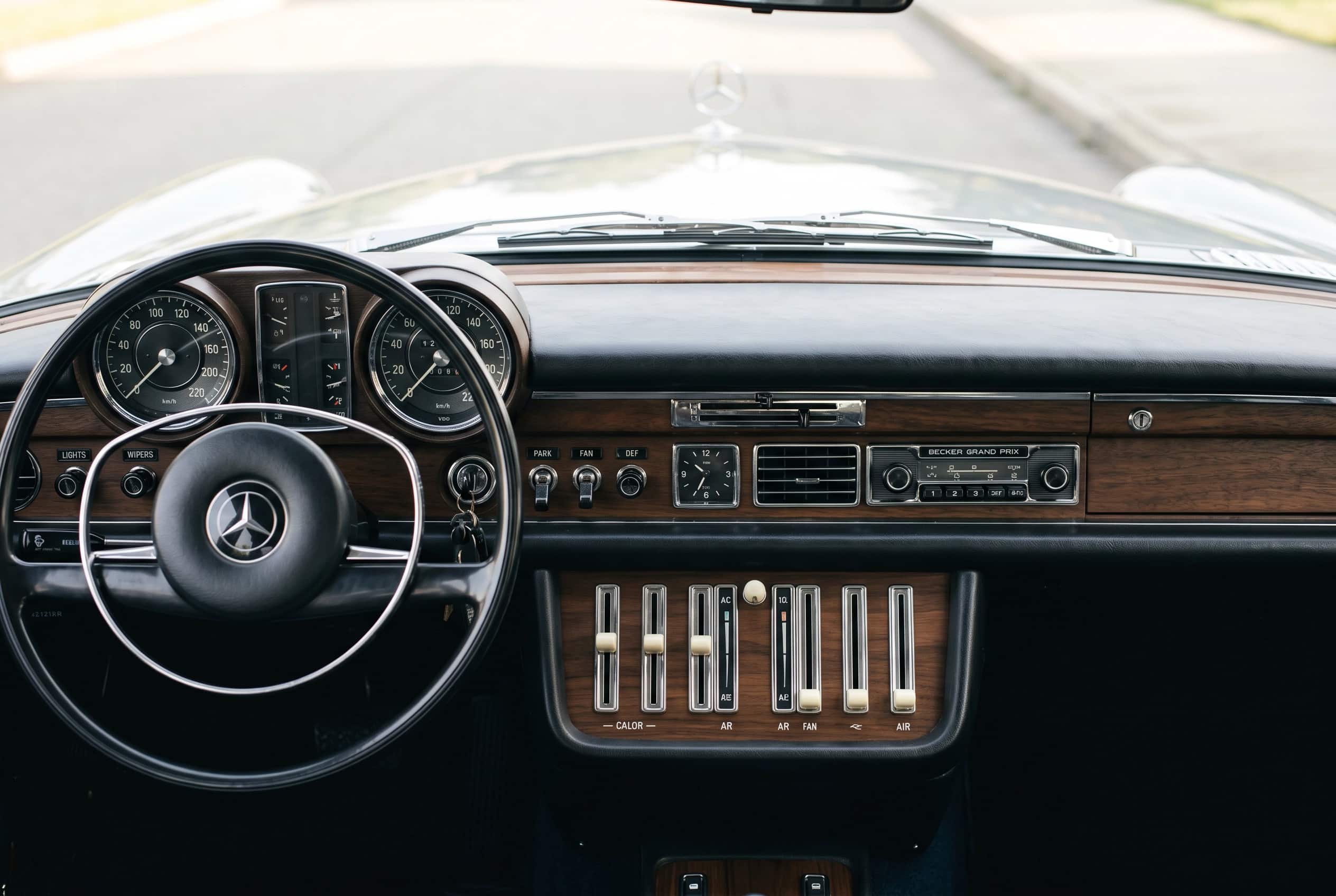
The Mercedes-Benz 600 dashboard is a document of authority. It is symmetrical, architectural, and organized with the clarity of a government decree. The instruments are large and round, their white numerals on black faces delivering information without interpretation. The wood is real walnut, matte-finished, applied in a single uninterrupted span. There is nothing decorative. There is nothing frivolous. The dashboard says: You are in command of a significant machine. We have given you the information you require. The rest is up to you. It respects the driver by not presuming to entertain him.
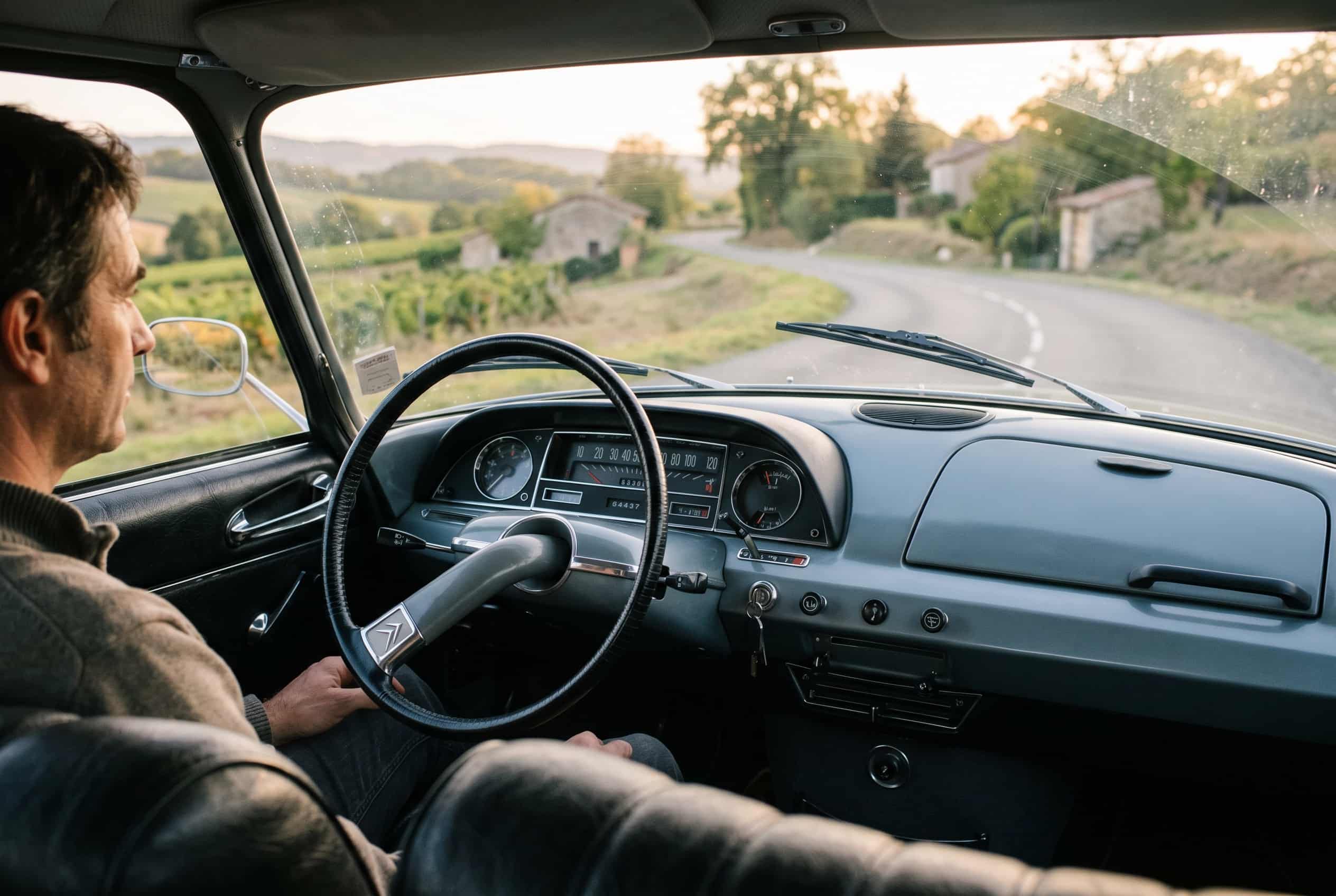
The Citroën DS dashboard is a document of radical intelligence. It is unlike anything else of its time. The single-spoke steering wheel curves upward from the column like a question mark. The instruments are few and deliberately unconventional. The dashboard surface is low, almost absent, as if the car is confident enough to leave the driver with empty space. The document says: We have rethought the automobile from first principles. We trust that you are clever enough to follow. It respects the driver by not presuming that he needs everything explained.
The original Range Rover dashboard is a document of utilitarian honesty. It is a flat, padded shelf with a simple instrument binnacle in front of the driver and a grab handle for the passenger. The materials are chosen for durability, not impression. There is no wood, no chrome, no pretense. The dashboard says: This machine is for work. It will get you there and back. It does not care what you are wearing. It respects the driver by not presuming that he needs flattery.
Table: Three Dashboard Philosophies
Element | Mercedes-Benz 600 | Citroën DS | Original Range Rover |
|---|---|---|---|
Core value | Authority and clarity | Intelligence and innovation | Utility and honesty |
Instrumentation | Large, symmetrical, comprehensive | Minimal, unconventional, selective | Simple, rugged, driver-only focus |
Materials | Walnut, chrome, leather, all genuine | Painted metal, molded plastic, designed for lightness | Padded vinyl, rubber mats, designed for endurance |
Center stack | Ordered, vertical, every control visible | Sparse, low, controls placed where needed | Bare, a tray and a grab handle |
Relationship to driver | Commander to informed officer | Innovator to early adopter | Toolmaker to working professional |
Moral argument | You deserve the truth, plainly stated | You deserve the future, intelligently delivered | You deserve capability, honestly built |
Each of these dashboards is honest. But they are honest about different things. The Mercedes is honest about power. The Citroën is honest about progress. The Range Rover is honest about purpose. The common element is that none of them lies. None of them pretends to be something it is not. That integrity is what makes them moral documents rather than mere interiors.
What the Modern Dashboard Confesses
If the old dashboards are documents of conviction, the modern dashboard is a document of anxiety. It is afraid of being seen as outdated. It is afraid of boring you. It is afraid that if it does not fill every surface with light and information, you will look elsewhere.
The symptoms are consistent across brands and price points. The screen has migrated from a modest position in the center stack to a tablet-like protrusion above the dashboard, or worse, a full-width span of glass stretching from pillar to pillar. The instruments, once deep-set and focused on essential driving data, have become configurable displays that can show navigation, media, or even a live feed of what the front-facing camera sees. The physical controls have been replaced by haptic surfaces, capacitive sliders, and voice commands that work most of the time.
What does this document confess? It confesses that the manufacturer does not trust the driver to be satisfied with driving. It assumes that you need to be connected, informed, entertained, and updated at all times. It treats the act of driving as a gap between notifications rather than an activity worthy of your full attention. It says, in effect: We do not think you are capable of being alone with a machine and a road. Here is a screen. Please do not feel bored.
This is not a moral judgment on technology. It is a moral reading of the choices that technology has enabled. The screen is not inherently corrupting. But the decision to make the screen the organizing principle of the dashboard—to subordinate every other design consideration to its size and brightness—is a decision about what matters. And what matters, according to the modern dashboard, is not driving. It is distraction, dressed up as connectivity.
The Honesty of the Analog
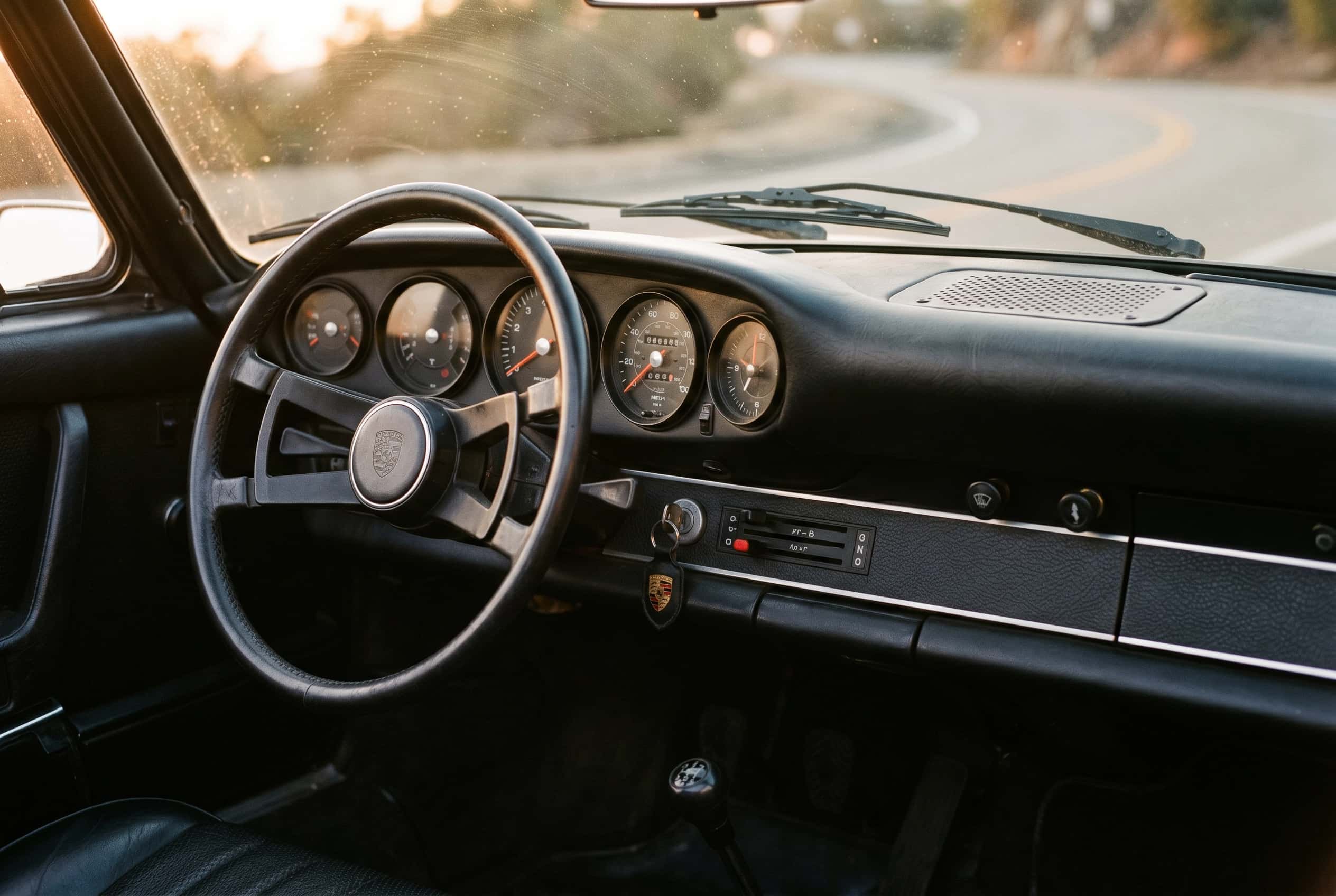
The dashboards I keep returning to share a quality that is difficult to name but immediately felt. I will call it analog honesty. By this I do not mean that they lack electronics—many of them contained sophisticated engineering for their time. I mean that they present information directly, through dedicated instruments with fixed functions, using needles and numerals that cannot be reconfigured or hidden. They say what they say, and they say it all the time.
This permanence of presentation is a form of respect. The driver does not have to select a display mode to see the oil pressure. The oil pressure gauge is there, in the same position, every time the driver glances down. The driver does not have to navigate a menu to adjust the cabin temperature. The temperature slider is there, with a detent that can be felt without looking. The relationship between the driver and the information is stable. It builds over time. The driver learns the dashboard, and the dashboard, by refusing to change, becomes trustworthy.
The modern configurable display destroys this stability. The information is fluid. It can be rearranged, replaced, or removed entirely. The driver never fully learns it because it is never fully the same. This flexibility is sold as personalization. But a moral document that can be rewritten at any moment is not a document. It is a suggestion. And a suggestion does not build trust.
The Small Decisions That Reveal Everything
The moral content of a dashboard is clearest not in the major design gestures but in the small, almost invisible decisions that no marketing department bothers to advertise.
The choice of typeface on the instruments. The old Mercedes used a clean, serifed font that looked like it belonged in a printed book. It was legible, dignified, and calm. The modern digital display often uses a sans-serif font optimized for screens—efficient but characterless. The old typeface said: We care about beauty as well as function. The modern one says: We care about function, and we assume you will not notice the difference.
The decision to include or omit a temperature gauge. The old practice was to provide full instrumentation: speed, revs, oil pressure, water temperature, fuel level, voltage. The modern practice is to replace most of these with warning lights that illuminate only when something has already gone wrong. The old practice said: We trust you to monitor the machine's health. The modern practice says: We will tell you when to panic.
The presence or absence of a physical volume knob. This sounds trivial. It is not. A knob that clicks as it turns, with a defined start and end point, can be operated in a fraction of a second without a single glance away from the road. A touch-sensitive slider requires visual confirmation. The knob says: Your attention is valuable. The slider says: Our aesthetic is valuable. Your attention is secondary.
These are not accidents of cost-cutting. A volume knob does not cost more than a touch slider in any meaningful sense. The difference is philosophical. One choice prioritizes the driver's ability to operate the car safely and intuitively. The other prioritizes the appearance of modernity. One is moral. The other is cosmetic.
The Dashboard as Character Reference
When I evaluate a car, I spend less time looking at the exterior than most people do. The exterior is what the car presents to the world. The dashboard is what it presents to you. It is the car's character reference, written in materials and layout, and it cannot be faked for long.
A dashboard built with conviction will reward years of use. The wood will darken. The leather will take on a sheen where hands have rested. The instruments will remain legible and calm. The controls will continue to click with the same weight they had when the car was new. The dashboard will age into a more complete version of itself, because the values it was built with are durable.
A dashboard built without conviction will betray itself within a single lease cycle. The soft-touch coating will peel. The piano black will scratch into a haze of micro-marring. The screen will begin to lag. The haptic buttons will become inconsistent. The dashboard will not age. It will degrade. And the degradation is itself a moral statement: the car was not built for you to keep. It was built for you to replace.
A Final Reading
The dashboard is the most intimate surface in the automobile. You look at it more than you look at your passenger. You touch it more than you touch the gear lever. It is the face the car turns toward you, and it cannot help but reveal what the car truly is.
The next time you sit in a car—any car—pause before you start the engine. Look at the dashboard. Read it. Ask what it assumes about your attention span. Ask what it thinks you need to know. Ask whether it trusts you to be alone with the act of driving. The answers will be there, written in the layout, the materials, the hierarchy of information, and the presence or absence of silence.
A good dashboard does not demand attention. It keeps it. And what it keeps, over years and miles, is a record of what someone, somewhere, believed you deserved.