
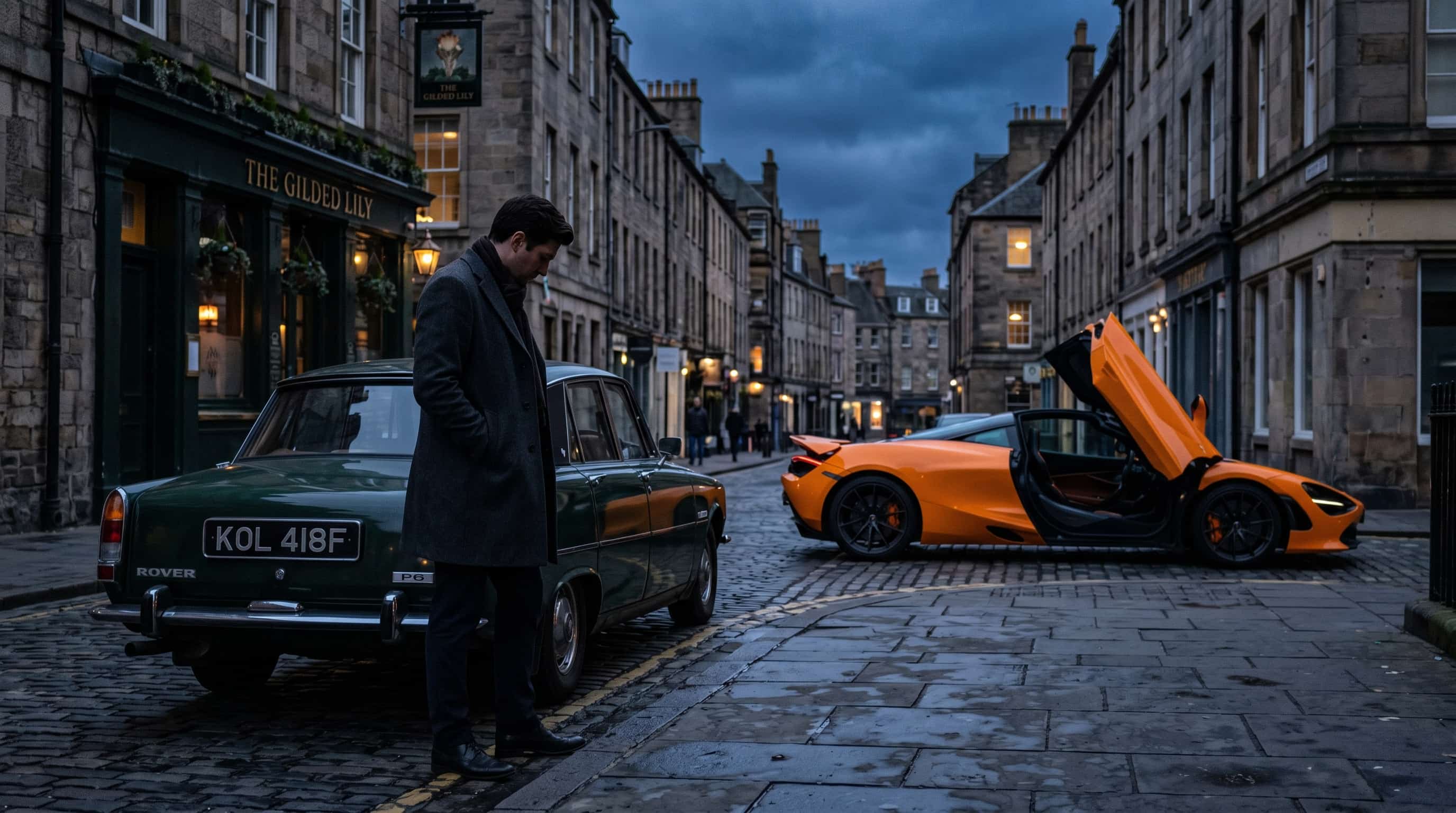
There are men who buy cars because they need transportation. I have met a few of them. They are not the subject of this essay.
The subject of this essay is the rest of us: the men for whom the choice of an automobile is never neutral, never purely practical, never free of the weight of what the car will say about them. For these men—and I am one of them—the car is a public statement made in sheet metal, visible before you enter a room and lingering after you have left. It is the largest object most men will ever choose, and the choice is legible to anyone who cares to read it.
The reading is not always flattering. A car can reveal taste, but it can also reveal its absence. It can reveal confidence, but it can also reveal the desperate need for validation. It can reveal a man who knows himself, or a man who has never asked the question. The car does not lie. It simply sits there, in the driveway or the parking space or the valet line, and tells anyone who is looking exactly what kind of man chose it.
The Car as Involuntary Confession
The car is a confession because it is a choice, and choices reveal priorities. A man who buys a car that is fast but uncomfortable is confessing that he values sensation over ease. A man who buys a car that is prestigious but ugly is confessing that he values recognition over aesthetics. A man who buys a car that is beautiful but impractical is confessing that he values form over function. None of these confessions is inherently damning, but each is revealing.
The confession is involuntary because most men do not think of their car choice in these terms. They think in terms of budget, requirements, brand loyalty, or what the reviews told them. But the reviews and the budget and the requirements are themselves shaped by deeper currents: what the man believes about himself, what he wants others to believe, what he fears, what he aspires to. The car is the final output of all these inputs. It is the answer to a question the man may never have consciously asked.
The Four Confessions
I have observed, over years of watching cars and their drivers, that automobile choices tend to cluster around four broad confessions. They are not rigid categories. A man can belong to more than one, or shift between them over a lifetime. But they are useful for understanding what a car is actually saying.
Table: What a Man's Car Reveals About His Priorities
The Confession | The Car | What It Says | What It Often Means |
|---|---|---|---|
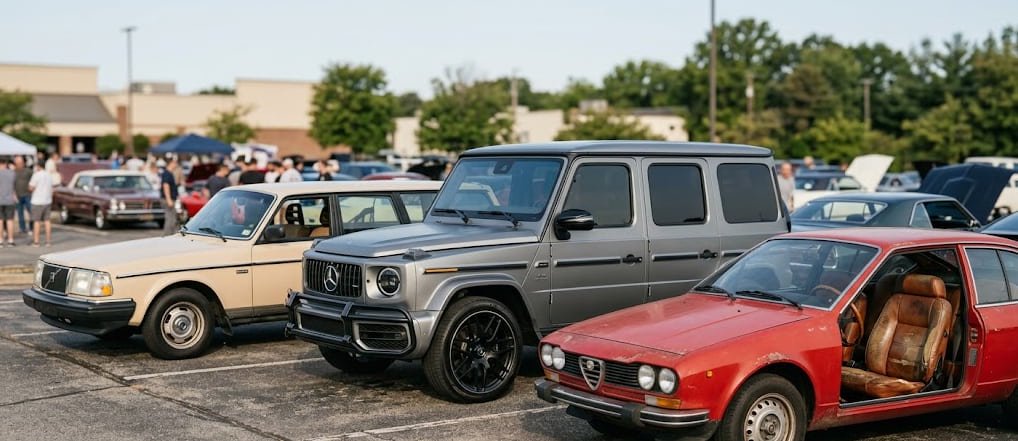
"I value substance over display." | Volvo 240, Saab 900, Mercedes W123, older Land Cruiser | The car is honest, functional, and unpretentious. It has aged because it was built to age. | The owner trusts his own judgment and does not require external validation. He may be indifferent to what others think, or he may actively distrust those who are not. |
"I want you to know what I spent." | Current-model luxury SUV with every option, oversized wheels, illuminated grille | The car is expensive and makes sure you know it. Every surface announces its cost. | The owner equates value with price and believes that others do too. He may be new to money, or insecure about his position, or simply unaware that taste and cost are different things. |
"I want you to know how fast I could go." | Modern sports coupe with aggressive aero, loud exhaust, track-day modifications | The car is capable of speeds the owner will never legally approach. The exhaust note is a declaration. | The owner identifies with performance, whether or not he uses it. The car is a fantasy of capability, and the fantasy is as important as the reality. |
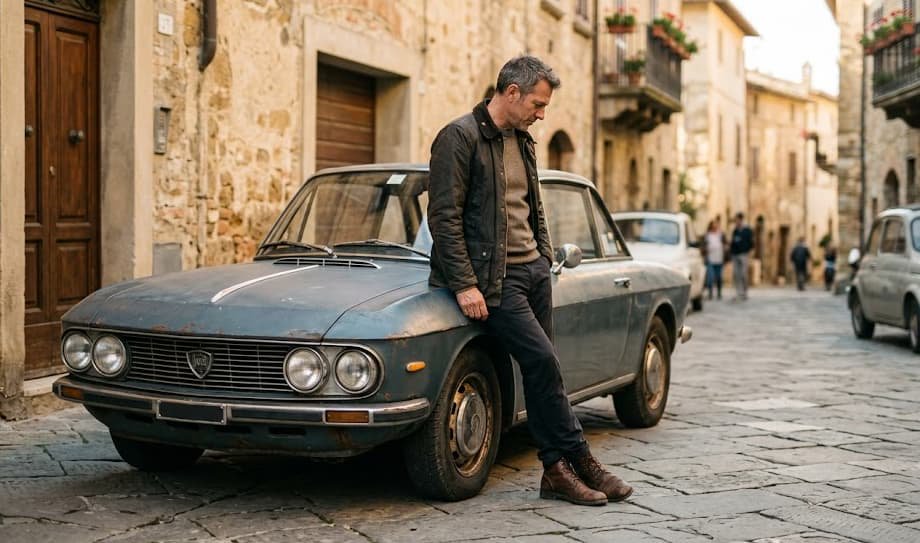
"I know something you don't." | Alfa Romeo Giulia Sprint, Lancia Fulvia, Citroën DS, Bristol 411 | The car is obscure, beautiful, and chosen with evident care. It rewards the knowledgeable observer and says nothing to anyone else. | The owner has done his homework. He values expertise and distinction over recognition. He would rather be understood by a few than noticed by many. |
The fourth confession is the one I find most interesting, and it is the one that this blog is largely written for. The man who chooses the obscure, beautiful car is not trying to impress a crowd. He is trying to satisfy a standard that he has set for himself. The car is a message, but it is a message sent on a frequency that most people do not receive. The man is comfortable with that. He did not buy the car to be received.
The Car That Knows More Than the Man
There is a complication, and it is one I have written about before: sometimes the car reveals more than the man intended, not because the man is hiding something, but because the car itself carries a cultural weight that the man has not fully understood.
A man buys a classic Jaguar because it looks elegant in the photographs. He does not realize that the car will also communicate a specific kind of Britishness, a specific relationship to speed, a specific tradition of engineering that was always more ambitious than reliable. The car knows these things. The man may learn them over time. But on the day of purchase, the car is already speaking a language the man has not yet learned. Observers who know the language will read the car more accurately than the man who bought it.
This is not a failure of the man. It is a feature of objects that carry cultural weight. The object contains more meaning than any single owner can exhaust. The owner grows into the car, or he does not. If he does not, the mismatch becomes visible. The car looks uncomfortable with its driver, the way a borrowed suit looks uncomfortable on a man who has never had anything tailored. The car is waiting for someone who understands it. The current owner is merely holding the keys.
The Man Who Chooses Well
If a car reveals the man, then a well-chosen car reveals a man who has done something difficult: he has been honest with himself.
The man who buys the loud luxury SUV because he wants attention is at least being honest about his desire for attention. The man who buys the track-ready sports car but never takes it to the track is being honest about his fantasies. But the man who buys a car that fits his life, his values, and his aesthetic—a car that he can explain without defensiveness and drive without apology—is being honest about something deeper. He has asked himself what he actually values, and he has had the discipline to choose accordingly.
This discipline is rare. It requires resisting the pull of what other people will think, what the reviews recommend, what the brand advertising suggests, and what the man's own insecurities whisper when he is alone in the showroom. It requires knowing the difference between the car that will impress strangers and the car that will satisfy the self. The two are rarely the same car.
The Car I Noticed
I was in a car park in western Massachusetts last autumn when I saw a man in his sixties get out of a Citroën DS. The car was pale blue, well-maintained but not restored, with a crack in the dashboard that had been there long enough to stop bothering anyone. The man was wearing a tweed jacket with leather patches on the elbows, and he was carrying a bag of apples from a farm stand. He did not look at anyone. He did not look around to see if anyone was looking at him. He locked the car, which rose slightly on its suspension as the hydraulics settled, and walked toward the market.
The car told me things about him. It told me that he valued engineering of a particular, eccentric kind. It told me that he was comfortable with attention that came from connoisseurs rather than crowds. It told me that he had probably owned the car for a long time, because a DS does not look like that unless it has been kept for years by someone who understands it. It told me that he was the kind of man who would rather explain his car to one interested stranger than impress a hundred indifferent ones.
I did not speak to him. I did not need to. The car had already spoken.
A Quiet Warning
I am not arguing that every car purchase should be an exercise in deep self-examination. There is room in the world for the practical choice, the economical choice, the choice made under constraint. But for men who care about cars—the men who read this blog, the men who notice a well-kept W123 in traffic and feel something shift—the choice is never purely practical. It is a statement. And statements, once made, cannot be retracted.
The next time you see a car and its driver together, look at the car first. Let it tell you what kind of man chose it. Then look at the man. The match, or the mismatch, will tell you everything you need to know.
The best cars do not demand attention. The same can be said of the best men. But when the two align—when the car and the man are speaking the same language, in the same register, at the same volume—the result is not a purchase. It is a portrait.