
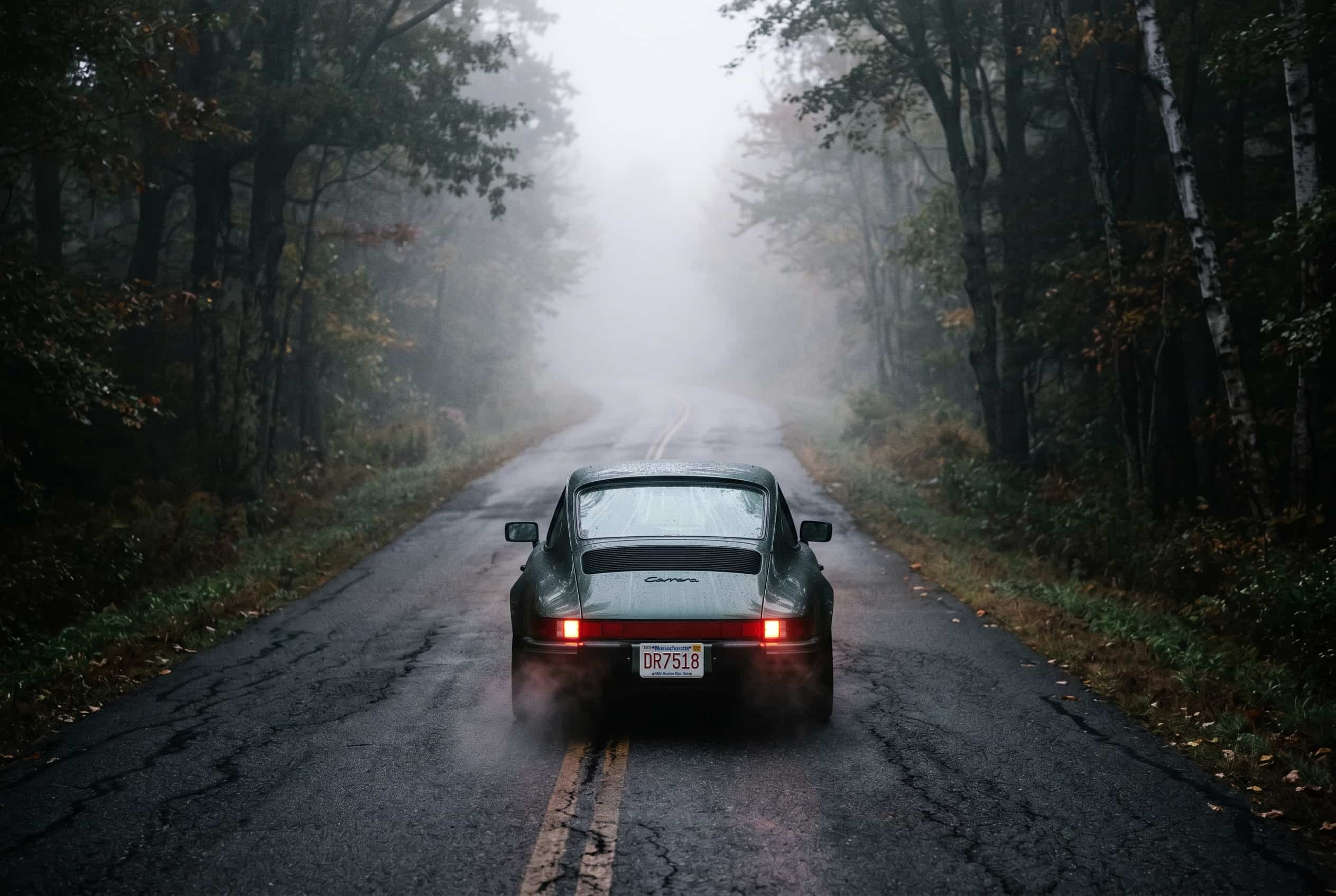
Last Thursday, at an hour when most of Boston was asleep, I took a drive that will never appear anywhere but in my own memory. The car was not fast. The road was not famous. There was no camera mounted to the windshield, no phone recording the exhaust note, no passenger filming the tachometer for a highlight reel that would be posted, captioned, and forgotten by Monday. I drove for an hour and a half through the tail end of a light rain, and when I returned home, the only evidence that the drive had occurred was the warmth rising from the engine bay and a quiet in my mind that had not been there before.
This is not how driving is supposed to work in 2026. In the current arrangement, a drive that is not documented is a drive that did not happen. The winding road exists to be a backdrop. The exhaust note exists to be a soundtrack. The car exists to be a prop. The driver is no longer a participant in the act of driving but a content creator managing a shoot. The experience has been hollowed out and replaced with its own representation.
I reject this arrangement entirely. This essay is about why.
The Performance of Motion
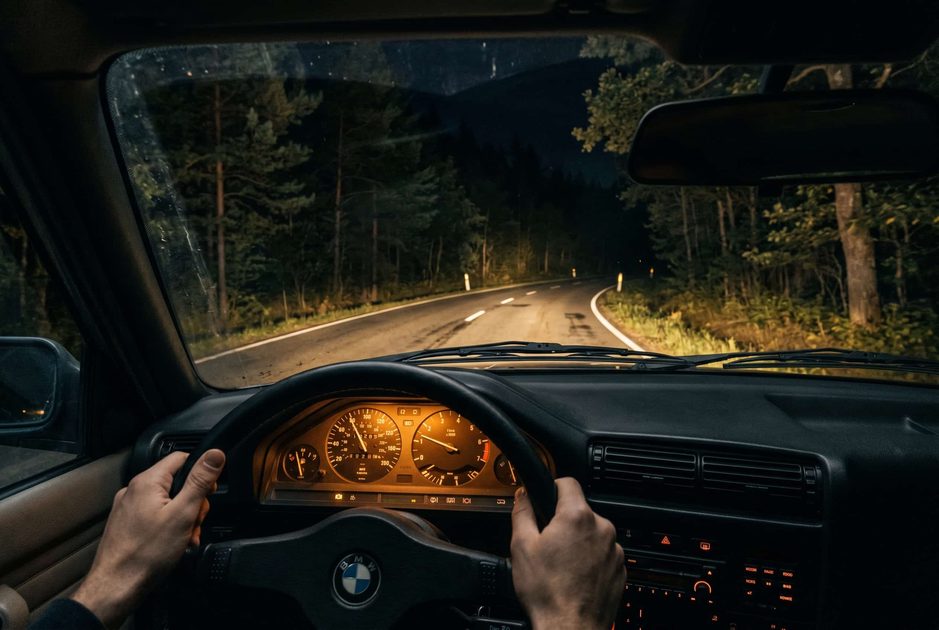
The condition I am describing has a name, though it is rarely applied to automobiles: the collapse of experience into content. It began with social media's arrival in the driver's seat and accelerated when automotive influencers realized that a spirited drive, properly edited, could generate the same engagement as a crash test or a celebrity sighting. The logic was intoxicating. Why simply enjoy a car when you can monetize it? Why keep a perfect road to yourself when sharing it builds a following?
The consequences are now visible everywhere. Mountain passes that were once quiet on weekday mornings have become rolling film sets, complete with tripods, drones, and photographers crouched in the apex of blind corners. Cars are modified not for the driver's pleasure but for the camera's appetite—louder exhausts, more dramatic flames, liveries designed to pop in a thumbnail. The drive itself becomes secondary, a raw material to be captured and processed. The driver, peering around a GoPro, is only half present for the corner they are taking.
I am not arguing that no one should photograph a car. I am arguing that the act of driving has been colonized by the act of performing driving, and that something essential is lost in the translation. The private drive—the one taken without an audience, without a purpose beyond the drive itself—is becoming an act of quiet defiance.
The Two Drives
It is useful to be precise about the distinction, because the difference between driving and performing driving is not always visible from the outside. The same road, the same car, the same speed—but the internal experience is fundamentally altered.
Table: The Private Drive vs. The Performed Drive
Element | Driving Without an Audience | Driving for an Audience |
|---|---|---|
Primary goal | The experience of motion, solitude, clarity | The capture of compelling footage |
Attention | Outward, on the road and the machine | Split between road, camera, framing, and imagined viewers |
Route choice | Roads chosen for feel, flow, or personal memory | Roads chosen for visual drama and camera placement |
Car setup | Set up for the driver's preferences | Set up for visual and auditory spectacle |
Speed | Determined by conditions and the driver's mood | Often determined by what looks fast on video |
Aftermath | Quiet satisfaction, memory, sometimes a notebook entry | Editing session, caption writing, engagement metrics |
Audience | None. The driver is answerable only to themselves. | A real or imagined crowd, whose validation shapes the experience. |
The private drive is an end in itself. The performed drive is a means to a different end—likes, followers, sponsorship revenue. The first expands the self. The second advertises it.
What the Camera Removes
The central loss of the performed drive is attention. A driver who is composing a shot is not fully attending to the road, the car, or the interior experience of motion. The mind is in two places, and the part that feels is subordinated to the part that frames.
But there is a subtler loss, and it has to do with memory. When a drive is recorded, it is externalized. The memory is stored on a memory card, not in the nervous system. The driver can review the footage later, but something about the act of recording prevents the experience from being fully absorbed. It is the difference between taking a photograph of a painting in a museum and standing in front of it for ten minutes with your phone in your pocket. One produces an image. The other produces a memory. They are not the same currency.
I have driven some of the best roads in New England with a camera running, and I have driven them without one. The unrecorded drives are the ones I carry. The recorded ones are files on a hard drive I rarely open. This is not a coincidence.
Solitude as Luxury
The luxury automobile market has spent decades adding features: massaging seats, refrigerated consoles, rear-seat entertainment systems, active noise cancellation. The stated goal is to make the car a sanctuary. But a sanctuary cannot be achieved by engineering alone. It requires a psychological condition: the absence of an audience.
You can be entirely alone in a car and still feel watched if you are driving for a camera. The camera is an audience of one, but it carries the weight of everyone who will eventually see the footage. The mind, aware of this future audience, subtly shifts into performance mode. The steering inputs become a little more theatrical. The throttle applications become a little more demonstrative. The driver is no longer driving for the road but for the viewer. The sanctuary has been breached by an imagined crowd.
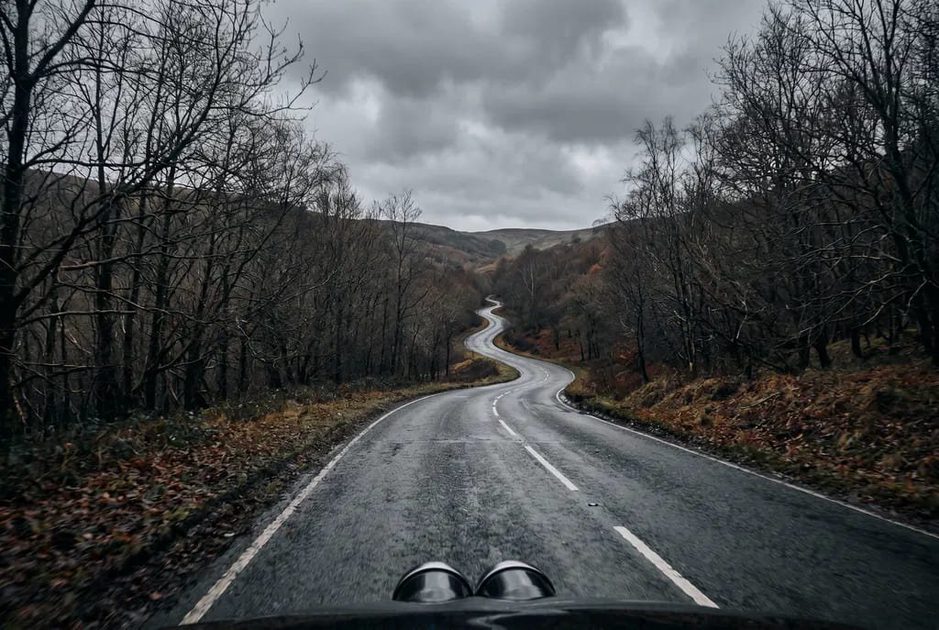
The private drive, by contrast, is the purest form of automotive solitude. There is no one to impress, no one to entertain, no one to prove anything to. The car can be driven at six-tenths, or eight-tenths, or simply cruised at the speed limit, and the only judgment is the driver's own. This is a radical condition in an era of constant visibility. It is a form of luxury that no option list can provide.
A Defense of the Undocumented
The drives that have stayed with me longest are not the fast ones, the dramatic ones, or the ones that would make a good video. They are the ones I took for no reason and told no one about.
The night I drove a Saab 900 through empty Connecticut backroads, the turbo spooling softly in third gear, the green-lit instruments the only light for miles. The winter afternoon I took a Mercedes W123 down to the coast and sat in the car with the engine off, watching the tide come in through a windshield streaked with salt. The dawn departure from a friend's house in the Berkshires, the road still wet from an overnight storm, the heater warming the cabin before the sun had cleared the hills.
None of these drives were photographed. None of them were posted. None of them were watched. And yet they are more present to me than any content I have ever consumed or created. They have become, over time, part of the private archive that every person builds without realizing it—the collection of moments that were lived, not captured, and are therefore irreplaceable.
This blog exists in part to defend those moments. Not to document them—documentation is exactly what they do not need—but to argue for their value, and to encourage anyone reading to take a drive that will never be seen by anyone else.
A Practical Invitation
I am not naive. I know that the performed drive will not disappear. The economic incentives that sustain it are too strong, and the human desire for validation is too deeply wired. But the private drive does not require the abolition of the public one. It requires only a decision.
Take a drive this week without your phone mounted. Leave the camera at home. Do not plan the route for its visual potential. Do not think about what song would make the best soundtrack. Just drive. Pay attention to the car, the road, the weather, and your own state of mind. Notice what happens when no one is watching.
The best cars do not demand attention. Neither should the best drives. They keep their meaning to themselves, and to the person who took them. That is more than enough.