
You’ve likely seen them at a concours or rolling through a weekend cars-and-coffee: a 1967 Mustang that sounds like a modern sports car, or a 1970s Porsche 911 with brakes that could stop a freight train. These aren’t restored cars and they aren’t modern recreations. They belong to a category that has grown from a niche obsession into a defining movement in automotive culture. The question, what is a restomod car, isn’t just about mechanics—it’s about philosophy, taste, and the quiet tension between memory and progress.
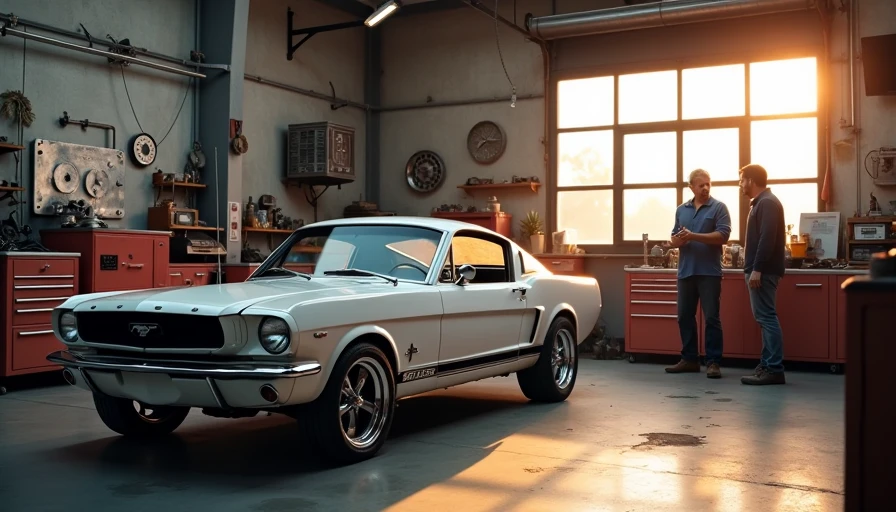
At its simplest, a restomod takes a classic automobile and reimagines it with contemporary components: a modern drivetrain, upgraded suspension, better brakes, and often a more refined interior. But that description barely scratches the surface. A restomod is not a restoration, which aims to return a car to its original factory state. Nor is it a hot rod, which prioritizes raw power and often discards original design cues. A restomod walks a finer line—it preserves the visual soul of the original while quietly upgrading everything that touches the road.
The best restomods don’t shout about their upgrades. They keep the silhouette, the character lines, the spirit of the original, but they drive like a car from this decade. That restraint is what separates a thoughtful restomod from a reckless custom job. It’s why the category has attracted serious collectors, design aficionados, and drivers who want to enjoy a classic without sacrificing reliability or safety.

The Origins: From Necessity to Art Form
The restomod movement didn’t emerge from a marketing meeting. It grew organically among enthusiasts who loved the look of a specific era but grew frustrated with the compromises of old engineering. Early examples appeared in the 1980s and 1990s, when hot rodders began swapping small-block Chevy engines into older chassis. But those early builds were often crude—power before poise. The modern restomod, as we know it, began to crystallize in the early 2000s, driven by a handful of specialist shops that treated the entire car as a design project.
Firms like Singer Vehicle Design, Icon 4x4, and Alfaholics didn’t just bolt new parts onto old shells. They re-engineered the vehicles from the ground up, maintaining the visual identity while rethinking the engineering. Singer’s air-cooled Porsches are the most famous example: from the outside, they look like a late-model 911 from the 1990s, with subtle flares and impeccable proportions. But underneath, they carry a bespoke engine, modern suspension, carbon fiber body panels, and an interior that blends aluminum, leather, and cloth with the precision of a Swiss watch. These cars cost six figures and have waiting lists years long.
What Defines a True Restomod?
Not every old car with a new engine qualifies as a restomod. The term implies a degree of completeness and coherence. A true restomod addresses every system: the engine, transmission, suspension, brakes, steering, electrical, and interior. The goal is to create a car that can be driven daily—or at least on long road trips—without the anxiety of a breakdown. This requires a level of craftsmanship that goes beyond what a weekend mechanic can achieve.
The design philosophy is critical. The body should appear largely stock, though subtle modifications like wider wheels, lower ride height, or custom lighting are common. The interior should feel period-correct but with modern materials and ergonomics—think heated seats, air conditioning, a discreet sound system. The driving experience should be seamless: a car that starts every time, idles smoothly, and handles corners with confidence.
This brings us to the emotional core of the question, what is a restomod car? It’s a vehicle that lets you have the past and the present simultaneously. You get the emotional resonance of a shape you fell in love with as a child, but you also get the competence of modern engineering. It’s a car that doesn’t demand you be a mechanic to enjoy a Sunday drive.
Examples That Define the Movement
To understand the range of restomods, consider three very different approaches. First, the Singer 911: an almost archaeological approach to the 964-generation Porsche, where every detail is agonized over, and the result is a machine that feels both familiar and new. Second, the Icon CJ3B (or the Icon BR based on the Ford Bronco): these are restored and restomoded off-roaders that combine vintage military styling with the comfort and capability of a modern SUV. Third, the Alfaholics GTA-R: a reimagined Alfa Romeo GTV that strips weight, stiffens the chassis, and fits a 240-horsepower engine into a car that originally had 130 horsepower.
Each of these builds answers the question differently. Singer focuses on preservation and enhancement of the original flavor. Icon emphasizes usability and durability. Alfaholics chases purity and driving engagement. All share a respect for the original design language and a refusal to let nostalgia hold them back from improvement.
Is a Restomod Right for You?
If you’re considering a restomod, you’re not just buying a car—you’re commissioning a statement. The cost is substantial: a true professional build can range from $100,000 to over $500,000. That price buys you something rare: a car that is entirely your own, built to your specifications, and free from the compromises of mass production. But it also means you’ve entered a conversation about authenticity, originality, and the purpose of preserving automotive history.
Some purists argue that altering a classic car destroys its historical value. They have a point—if the car is a rare, unmolested survivor, it should probably stay that way. But for more common models—the ones produced in thousands or even millions—a restomod can be the difference between a car sitting in a garage and one that is driven, enjoyed, and maintained. The movement has arguably saved many cars from oblivion by making them viable for modern use.
The Quiet Art of the Restomod
What is a restomod car? At its best, it is a dialogue between two eras. It honors the design heritage of a bygone age while embracing the mechanical competence of today. It is not about creating a perfect replica or a show-stopping custom—it is about building a car you want to live with, a car that fits your life without asking you to abandon your memories. The best restomods do not demand attention. They earn it, mile after quiet mile. And that, perhaps, is the truest measure of their success.