
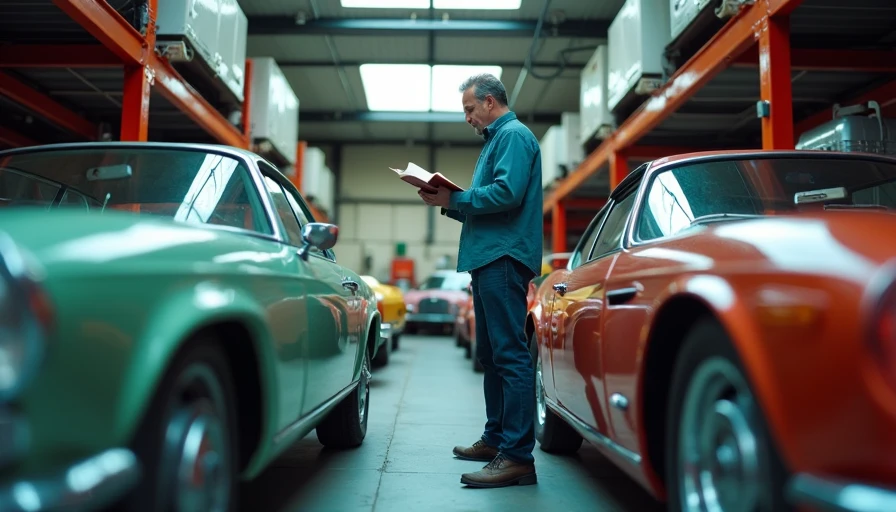
If you've ever wondered how to start a car collection, you're not alone. Many enthusiasts dream of assembling a garage of significant vehicles, but the path is often unclear. This guide offers a calm, deliberate approach to building a collection that reflects your personal taste and appreciation for automotive design. Whether you are drawn to classic sports cars, vintage sedans, or modern icons, the principles remain the same: clarity of purpose, disciplined budgeting, and patient research.
Define Your Focus
Before you buy anything, take time to understand what draws you to certain cars. Is it the engineering of 1960s Italian roadsters? The restrained elegance of a silver Mercedes SL? The raw character of an air-cooled Porsche 911? A focused collection tells a story. It could center on a single marque, a specific era, a body style, or even a design philosophy. Define your theme not as a limitation but as a lens that gives each acquisition meaning. Without focus, you end up with a random assortment of vehicles that lack cohesion and emotional resonance.
Set a Realistic Budget
Car collecting need not be reserved for the ultra-wealthy. Many rewarding collections begin with a modest budget and grow over time. Determine how much you can comfortably allocate without straining your finances. Remember that the purchase price is only the beginning – insurance, storage, maintenance, and restoration costs add up quickly. A common rule is to spend no more than 10% of your disposable income on the hobby annually. Start with a single well-chosen car and let the collection evolve organically as your knowledge and resources grow.

Research and Build Knowledge
Immerse yourself in the history and nuances of the models you admire. Read books, attend auctions, join online forums, and visit museums and car shows. Talk to owners and specialists. Understanding what makes a car desirable – originality, provenance, documentation, condition – will save you from costly mistakes. Knowledge also sharpens your eye for quality and helps you identify potential bargains before the market catches up. This phase is as rewarding as the acquisition itself.
Start with Your First Car
Your first purchase sets the tone for everything that follows. It should be a car you truly love, one that fits your theme and budget, and one that is in good enough condition to drive and enjoy regularly. Avoid the temptation to buy a project car that needs extensive restoration unless you have the skills and time. A drivable, presentable example lets you experience the joy of ownership immediately. Consider classics like the Mazda Miata, a BMW 2002, or a Porsche 944 – all are affordable, engaging, and full of character.
Maintenance and Storage
Proper storage is essential to preserve your car's value and condition. A dry, climate-controlled garage is ideal. If you lack space, consider renting a storage unit designed for collector cars. Regular maintenance – even for cars you drive infrequently – prevents deterioration. Fluids, tires, and seals degrade over time. Establish a relationship with a trusted mechanic who specializes in your car's marque. Keep detailed records of every service and expense; they add to the car's provenance and can enhance resale value.

Joining the Community
One of the greatest rewards of collecting cars is the community. Local clubs, national registries, and online groups connect you with people who share your passion. They organize drives, meets, and technical sessions where you can learn and share stories. Being part of a community also provides access to parts, advice, and opportunities to acquire cars outside the open market. It transforms collecting from a solitary pursuit into a shared culture.
A Practical Checklist for Your First Year
Once you know how to start a car collection, the first year sets the foundation. A deliberate approach prevents costly mistakes. First, join at least one car club or online forum dedicated to your chosen theme. This connects you with experienced collectors who can offer advice and leads. Second, attend three to five auctions or premier car shows, even without buying — observing the market teaches you pricing trends and condition standards. Third, secure proper insurance: agreed-value policies protect your investment better than standard auto insurance. Fourth, set aside a maintenance fund equal to 10% of your car's purchase price for unexpected repairs. Fifth, drive your car at least monthly to keep seals, fluids, and tires in good shape. Finally, keep a detailed binder with photos, receipts, service records, and a log of every trip and event. This documentation builds provenance and makes your collection more attractive to future buyers. At the end of the first year, review your collection's theme and budget: have your tastes evolved? Adjust your plan for year two accordingly. Remember that patience is your greatest asset — the best collections grow slowly and intentionally.
Conclusion
Learning how to start a car collection is as much about personal discovery as it is about acquiring vehicles. The best collections are built slowly, with thought and restraint. Let each car you add deepen your appreciation for design, history, and the quiet joy of preserving something with character. Remember: a collection is not measured by size or monetary value, but by the stories it holds and the pleasure it brings.