

There is a moment at every vintage car auction when a car crosses the block and the room leans in. It is not always the most expensive car, the fastest, or the rarest. Something else is at work. Collectors understand that what makes a car collectible is rarely a single attribute. It is a quiet convergence of design, history, scarcity, and emotional weight—factors that together transform a machine into an object of lasting desire.
Rarity alone is not enough. There are rare cars that few people want, just as there are mass-produced cars that have become deeply coveted. The real question is why certain cars hold their value or appreciate, while others fade into obscurity. The answer lies in a handful of enduring principles.
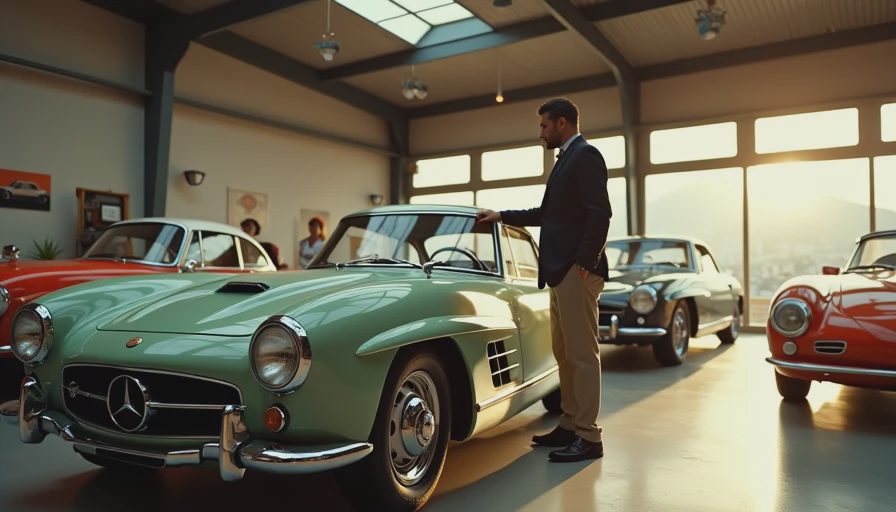
Rarity and Production Numbers
Low production numbers are often the first factor enthusiasts cite, and for good reason. Limited runs create natural scarcity. Models like the 1963 Corvette Grand Sport (only five built) or the 1970 Plymouth Superbird (around 1,900 units) are sought after partly because few exist. But scarcity must be paired with desirability. A car that was never desirable in its day rarely becomes collectible later. The 1981 DeLorean DMC-12 is not particularly rare (about 9,000 built), yet its cultural association with Back to the Future has made it collectible. Rarity matters most when the car was already interesting.
Design and Era-Defining Character
The best collectible cars are those that capture the spirit of their era through design. A well-proportioned body, distinctive lines, and a coherent interior create a lasting impression. Cars like the Jaguar E-Type, the Porsche 911 (especially early models), and the Alfa Romeo Spider are cherished not for raw performance but for how they look and feel. Their design language communicates an era’s ambition and restraint. What makes a car collectible often begins with how it makes you feel when you walk toward it in a parking lot.
Cultural Resonance and Story
Cars become collectible when they are woven into cultural memory. A car that starred in a beloved film, carried a famous owner, or marked a technological breakthrough carries a story that transcends its metal. The 1968 Ford Mustang GT from Bullitt, Steve McQueen’s personal Porsche 911S, or the Batmobile replicas—each is collectible because its narrative is inseparable from its identity. Collectors are buying into a story, not just a vehicle. This emotional connection is often what separates a simply old car from a truly collectible one.
Condition and Originality
A collectible car’s value is heavily influenced by its state of preservation. Originality—matching numbers, factory paint, correct interior materials—often commands a premium over restored examples. Documentation, service records, and known ownership history add layers of authenticity. While some collectors accept tasteful modifications, the market generally rewards cars that have been maintained rather than transformed. Patina, when honest and well-cared-for, can be as desirable as a fresh restoration. The goal is to preserve the car’s soul, not erase its life.
The Emotional Element
Ultimately, what makes a car collectible is a degree of emotional resonance. A car that evokes nostalgia for a specific time, place, or personal memory holds power beyond logic. Collectors often describe the feeling of sitting in a vintage 356 Porsche or a 300SL Gullwing as transportive. That intangible quality—the way a car can make you smile before the engine even starts—is the final ingredient. The best cars do not demand attention. They keep it.
A Practical Checklist for Aspiring Collectors
If you are wondering what makes a car collectible and how to identify a promising candidate, start with a simple evaluation. Look for low production numbers combined with a compelling backstory. Check for original components—matching numbers engine, factory wheels, and intact interior. Study the car's market trends: has its value risen steadily over the past five years? Consider the car's community. A strong enthusiast base, active forums, and available parts support long-term desirability. Documentation is critical. A car with a full service history, original window sticker, and owner's manual commands a premium. Even a simple binder of receipts can increase value significantly. Finally, trust your gut. The cars that hold value most reliably are the ones that make you want to drive them.
Take the Mazda MX-5 Miata as an example. It was never rare, with over a million built. Yet early models, especially the 1990-1997 NA generation, have climbed in value. The reason is not scarcity but purity of design and a massive, passionate fan base. This illustrates that what makes a car collectible is often a mixture of driving joy and cultural resonance rather than simple rarity. When you see a well-preserved first-gen Miata at a show, you understand why collectors pay a premium.
Other surprising examples include the Honda S2000, the Toyota Supra A80, and even the Ford Focus RS. Each had relatively high production numbers but a dedicated following that preserved examples and created demand. The key insight is to buy what you love, maintain it well, and let time do its work.
You can learn more about evaluating potential investments by joining local car clubs, attending auctions, and reading model-specific forums. The more you immerse yourself, the clearer the patterns become. Ultimately, understanding what makes a car collectible is a rewarding journey that combines knowledge, passion, and patience.
In the end, collectibility is not a formula. It is a conversation between a car’s past and a buyer’s heart. The cars that endure are the ones that tell a story we want to hear again and again.