
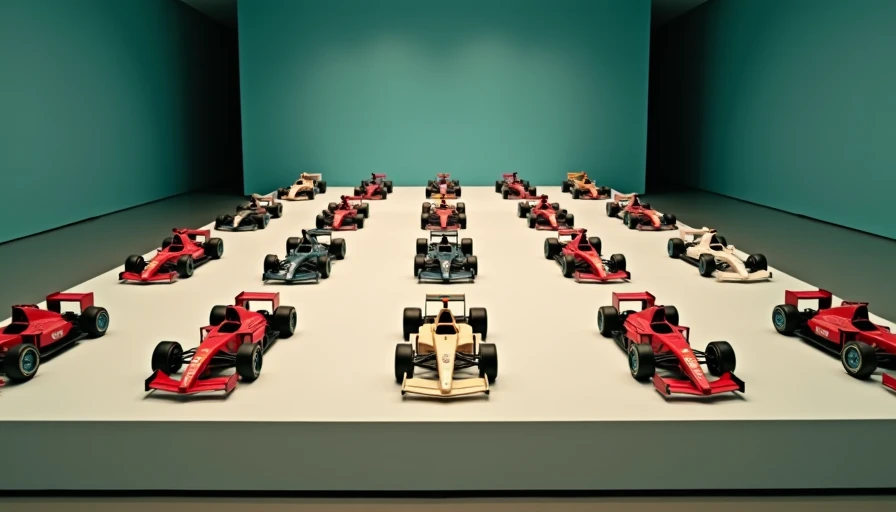
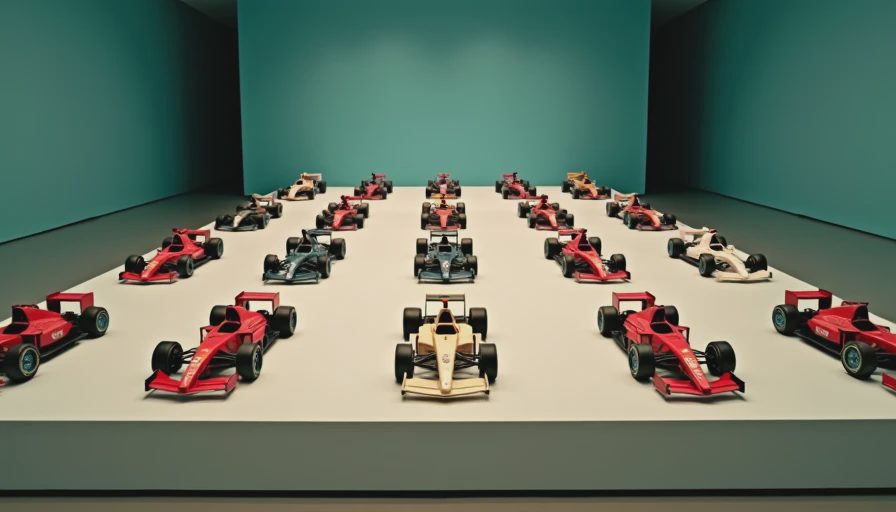
The evolution of the Formula 1 car is not merely a story of lap times and horsepower. It is a narrative of design philosophy, material culture, and the shifting idea of what a racing car should be. From the front-engined behemoths of the 1950s to the hybrid power units today, each era reflects the values of its time—elegance, aggression, efficiency, or spectacle. The best Formula 1 cars do not demand attention. They keep it, through lines that linger in memory long after the race ends.
The Front-Engined Era: Beauty and Brawn
In the 1950s, Formula 1 cars were long, narrow, and driven by men in cloth helmets. The Maserati 250F and the Mercedes-Benz W196 were masterpieces of proportion, with their engines sitting ahead of the driver. The evolution of the Formula 1 car during this period was about balancing power with the limits of tire and chassis technology. These cars were beautiful in a way we rarely see today—painted in deep blues, reds, and silvers, their shapes uncluttered by wings or sponsored decals. The driver sat high, exposed to the elements, wrestling a steering wheel with no power assistance. It was a time when mechanical sympathy and bravery mattered as much as engineering.
The Rear-Engine Revolution
The 1960s brought a fundamental shift. Colin Chapman’s Lotus 25 introduced a monocoque chassis and the engine behind the driver. This was the moment the evolution of the Formula 1 car began to accelerate in a new direction. The center of gravity moved rearward, traction improved, and the cars became lighter and more responsive. The Lotus 49, with its Cosworth DFV engine, became a legend not just for its victories but for its purity of form. It looked purposeful, almost minimal, like a piece of sculpture designed for speed. The era also saw the first wings appear, initially as crude add-ons, but they hinted at the aerodynamic obsession to come.
Ground Effect and the 1970s
By the 1970s, aerodynamic downforce became the dominant religion. The evolution of the Formula 1 car took a dramatic leap with ground effect, pioneered by Lotus in the form of the Lotus 79. Side skirts sealed the underbody, creating a low-pressure zone that literally sucked the car to the track. Drivers described the sensation as being on rails. But the brute force of ground effect also made cars physically punishing—stiff suspension, heavy steering, and a ride that left drivers exhausted. This decade taught engineers that speed and comfort rarely coexist. The cars became wider, lower, and more aggressive in stance, a visual language that still echoes in today’s machines.
The Turbo Era: Power as Theater
The 1980s were defined by turbocharged engines that produced enormous power—sometimes over 1,000 horsepower in qualifying trim. The evolution of the Formula 1 car during this period was one of extremes: massive rear wings, fat tires, and a danger that bordered on the reckless. Cars like the McLaren MP4/4, which won 15 of 16 races in 1988, achieved a kind of perfection, but they also demanded immense concentration from drivers like Ayrton Senna and Alain Prost. The era ended when regulations banned turbos and cut power, but the legacy remained: Formula 1 cars had become high-tech weapons, no longer elegant but terrifyingly effective.
Electronics, Safety, and the Return of Restraint
The 1990s brought electronics—traction control, active suspension, semi-automatic gearboxes—and with them, a new complexity. The evolution of the Formula 1 car entered a phase where the driver became part of a system rather than its sole master. The Williams FW14B and FW15C were feats of engineering, with active ride height and anti-lock braking, but they also blurred the line between man and machine. Safety improved after the tragedies of the past, and cars grew wider and heavier. By the 2000s, the V10 engines sang at 20,000 rpm, but the cars themselves were more about data than soul. Designers focused on efficiency—every surface shaped by computational fluid dynamics, every louver tested in a wind tunnel.
Hybrids and the Modern Era
Today, the evolution of the Formula 1 car is driven by hybrid technology and energy recovery. The power units are incredibly complex, with turbocharged V6 engines supplemented by electric motors. The cars are larger than ever, their bodywork a riot of bargeboards, diffusers, and complex aerodynamic elements. Yet there is a quiet elegance in how they have adapted to the demands of sustainability. The Mercedes W11 and Red Bull RB19 represent the peak of current design, but they lack the romantic lines of earlier decades. The modern Formula 1 car is a tool, optimized within regulations, its beauty found in the precision of its execution rather than the sweep of its silhouette.
Reflection: What Remains
The evolution of the Formula 1 car is not a linear march to perfection. Each era gave something up. The 1950s had grace but no grip. The 1980s had power but no safety. Today has performance but perhaps less character. The best cars—like the Lotus 49, the McLaren MP4/4, and the Ferrari 312T—are remembered not just for winning, but for how they made us feel when they appeared on track. They kept our attention not through noise, but through the quiet authority of their design. And in that, they remind us that the evolution of a machine is also the evolution of what we value.