
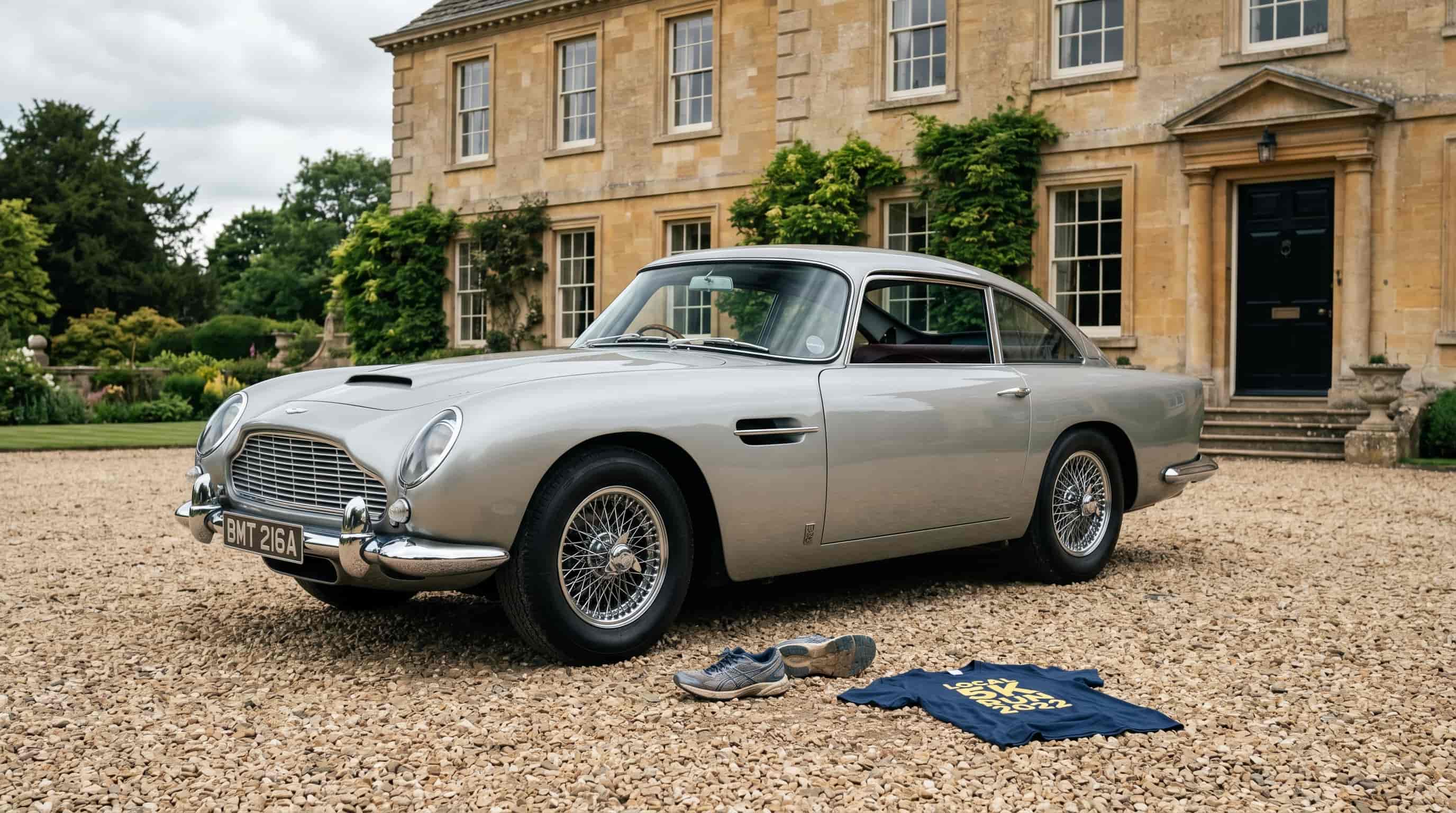
The car is perfect. The shutlines are uniform, the paint has a depth that suggests it was applied by someone who thought of it as a finish rather than a coating, and the interior smells of leather that has never been treated with anything except use and time. It is a machine that communicates taste without speaking, confidence without strutting, and wealth without the faintest trace of a logo.
And then the door opens, and a man gets out.
He is wearing a polo shirt that is simultaneously too tight across the shoulders and too loose at the waist, a pair of jeans that have been artificially faded by a machine rather than a life, and sneakers that cost more than they look and were designed by a committee in a meeting about what eighteen-year-olds will want in eighteen months. He does not look at the car. He does not seem aware that the car is silently, politely, out-dressing him from grille to tailpipe.
This is not a rare sight. I have seen a man step out of a Series 1 Jaguar XJ in cargo shorts. I have seen a man fill a Lancia Flaminia coupe with fast-food wrappers while wearing a baseball cap from a software company. I have seen a man rev a perfectly restored Mercedes-Benz 280SL at a stoplight in a jacket made of synthetic material that crinkled when he moved. The car, in each case, was dressed for an occasion. The man was dressed for a different one entirely.
This essay is not about fashion. It is about the strange, unspoken fact that some automobiles have better taste than the people who own them—and what that disparity reveals about the difference between a machine that was designed and a wardrobe that was merely acquired.
The Car as a Garment, The Man as a Wearer
A car is the largest garment a man will ever wear. It wraps around him in public, visible from every angle, stationary or moving. It announces his presence before he enters a room and lingers after he has left. It is, in the most literal sense, a piece of clothing—a metal suit, tailored and proportioned, that he chooses and then occupies.
The designers of the best automobiles understood this. When Pininfarina shaped a Ferrari, when Sir William Lyons finessed a Jaguar, when Paul Bracq penned a Mercedes, they were not merely solving engineering problems. They were cutting a garment for a specific kind of man. The shoulder line of the fender, the drape of the roofline, the break of the rear deck—these are sartorial terms applied to sheet metal, and they are not metaphors. They are the exact same disciplines, translated into a different material.
The problem arises when a man who has never thought about the cut of a jacket or the weight of a fabric purchases a car that was designed by someone who thought about nothing else. The machine arrives with an intact aesthetic intelligence. The man arrives with whatever was in his closet. The mismatch is not a fashion failure; it is a failure of attention. The man has bought a tailored suit without realizing that it is a suit, and that suits expect something of the wearer.
What the Car Knows That the Man Forgot
An automobile that dresses well does not do so by accident. It is the product of a coherent set of aesthetic principles: proportion over ornament, material honesty over simulation, restraint over expression. These principles are not unique to cars. They are the same principles that govern a well-cut jacket, a well-proportioned room, or a well-set table. The car knows them. The man, more often than not, does not.
Table: The Car's Taste vs. The Owner's Choices
Design Principle | How the Car Expresses It | How the Owner Often Betrays It |
|---|---|---|
Proportion | Hood-to-cabin ratio, glass-to-metal balance, wheel-to-arch relationship | Ill-fitting clothing, trousers that pool or crop, a jacket that pulls at the button |
Material Honesty | Uncoated leather that ages, open-grain wood, solid chrome | Synthetic fabrics that reflect light unnaturally, plastic watches, branded logos as decoration |
Restraint | Minimal badging, clean surfacing, no fake vents or strakes | Logo-heavy garments, excessive accessories, the need to signal brand at every opportunity |
Coherence | Every line and surface works together toward a single visual statement | Outfits assembled from disparate trends, no unifying color or silhouette, a sense of trying too hard |
Patina | Leather that darkens with use, paint that wears gently, chrome that dulls to a soft luster | Artificially distressed denim, pre-scuffed sneakers, the opposite of earned wear |
Occasion | The car knows what kind of arrival it is making and dresses accordingly | The owner often arrives as if he walked out of a different story entirely |
The car in the left column is not necessarily expensive. A well-kept Volvo 240 has more aesthetic integrity than a poorly specified modern luxury sedan. The principle is not about cost. It is about coherence. And the man in the right column is not necessarily poor. He is simply unaware that the car he owns has already set a standard that his own choices do not meet.
The Silence of the Machine
The most uncomfortable part of this mismatch is that the car does not complain. It does not refuse to start in protest at the owner's polyester jacket. It does not lock its doors against the man in the branded cap. It simply sits there, impeccably dressed, and waits to be driven. The car is silent in its superiority. The man is unaware of the comparison. The only person who notices is the observer who still believes that these things matter.
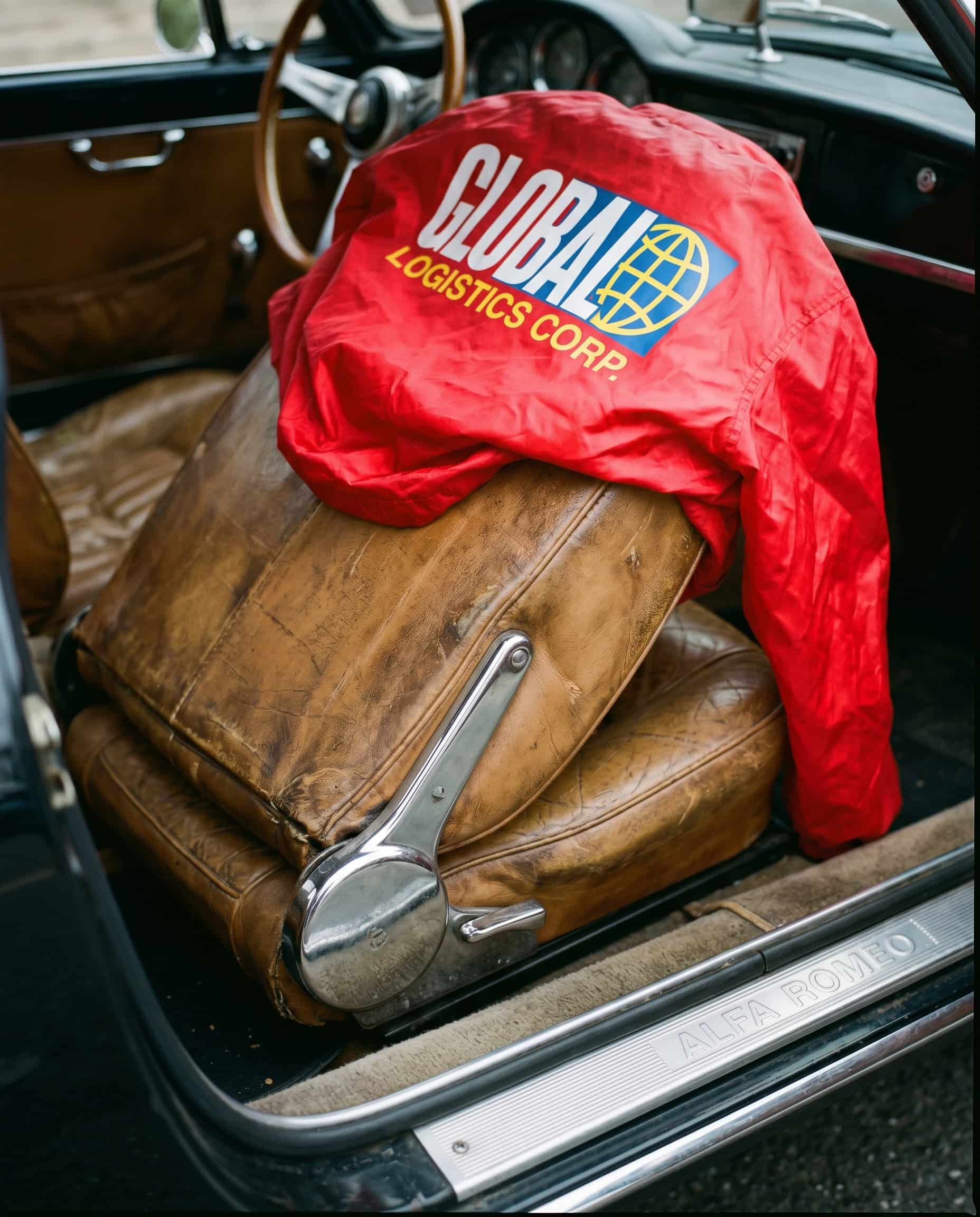
I have been that observer more times than I can count. I have watched a 1960s Alfa Romeo Giulietta—a car so delicate and intelligent in its design that it looks like a thought made metal—pull into a gas station and disgorge a driver in flip-flops and a t-shirt that references a television show. The Alfa did not react. The Alfa cannot react. But the sight was a small wound, and I felt it.
This is not snobbery. It is the recognition that a machine of great aesthetic intelligence deserves a custodian who understands what it is. Not someone who can afford it—money solves the purchase, not the relationship—but someone who can read it. The problem is not that wealthy men lack taste. The problem is that taste is a skill, and skills require cultivation, and cultivation requires the belief that it matters whether a thing looks right or not.
The Man Who Rises
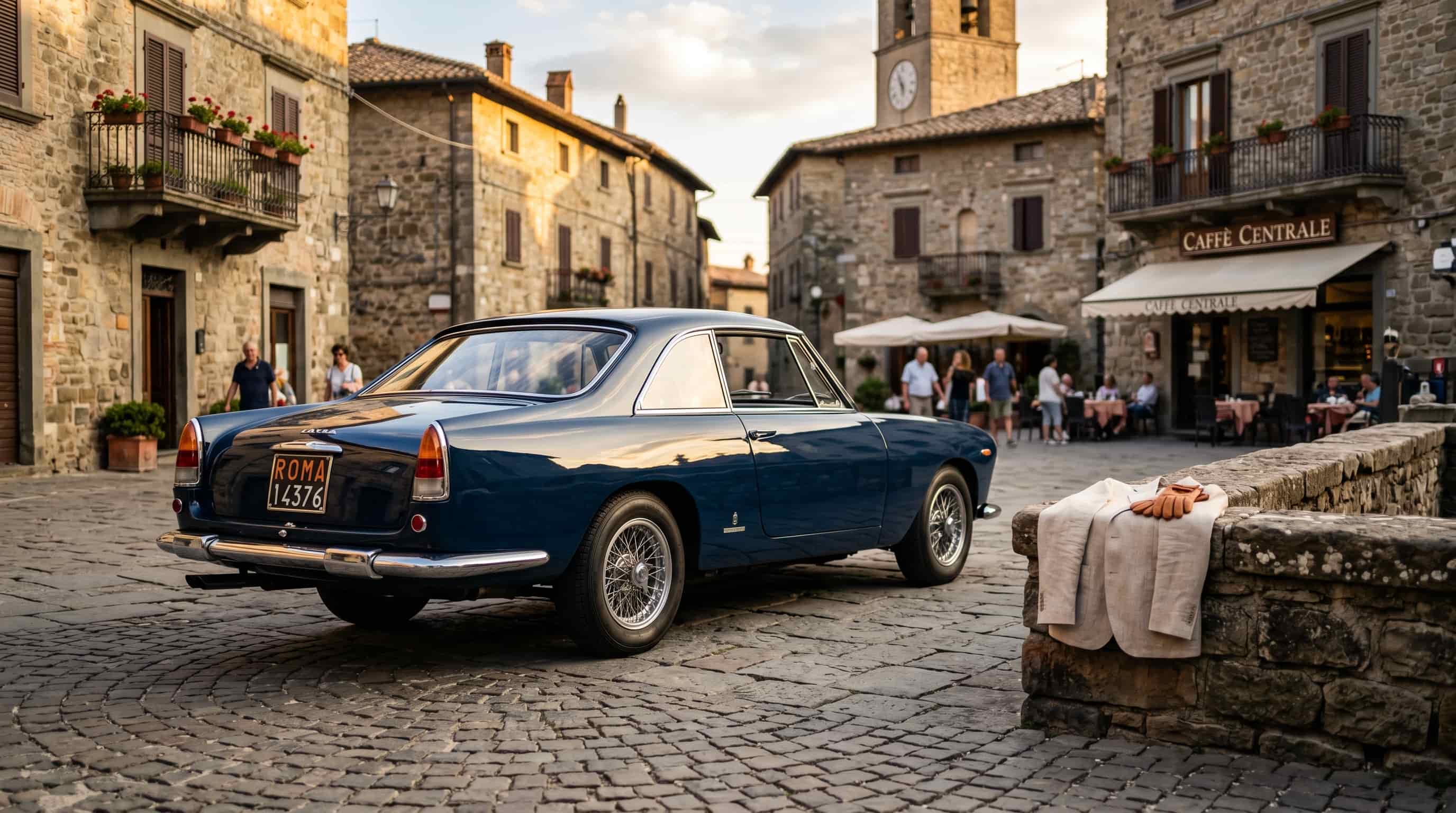
There are exceptions. I have seen a man step out of a Bristol 411 wearing a tweed jacket that fit him like a second skeleton, and I have seen the car and the man and known that they belonged to the same story. I have watched a woman in a well-tailored coat and leather boots park a Citroën DS, and the entire scene—the car, the person, the street, the weather—resolved into a single coherent image, like a frame from a film that had been directed by someone with an eye.
What those exceptions share is an understanding that the car is not separate from the person but continuous with them. The choice of automobile and the choice of clothing are both choices about how one wishes to be seen, and they should be governed by the same disciplines. A man who thinks about the shoulder line of his jacket can learn to see the shoulder line of a car. A man who understands the drape of a wool overcoat can understand the drape of a sedan's body side. The principles are transferable. The eye, once trained, can move between scales.
The tragedy is not that some cars out-dress their owners. The tragedy is that many owners do not notice, and would not care if they did. They have been taught that a car is an asset, a performance tool, or a statement of arrival. They have not been taught that it is a garment, and that garments come with responsibilities.
A Quiet Conclusion
I am not proposing that car ownership should require a wardrobe inspection. I am observing that when a beautifully designed machine is placed in the care of someone who has never considered the cut of his own trousers, something small but real is lost. The car continues to function. It continues to turn heads. But it is alone in its elegance. The man inside it is a passenger in his own purchase.
The next time you see a well-dressed car—a Series 1 XJ, a 911 before water cooling, a Mercedes coupe from the era when they were still built by men who signed their work—look at the person who opens the door. You might see a kindred eye. You are more likely to see a missed opportunity. The car will not mind. But you will, if you are the kind of person who reads a blog called The Quiet Marque.
The best cars do not demand attention. Neither do the best-dressed men. But when the two coincide—when the car and the man are dressed for the same occasion, in materials that age, in proportions that hold, in a silence that speaks—the effect is not merely pleasant. It is whole. And wholeness, in a world of fragments, is worth chasing.