
For anyone who genuinely loves cars—not just the noise and the numbers, but the lines, the materials, the stories—the **best car museums in the world** are not simply repositories of metal and glass. They are temples to memory, design, and the restless human ambition to create something that moves both body and soul. Walking through these halls, you feel the weight of history, the quiet dialogue between eras, and the silent pride of engineers and stylists who believed that a car could be more than transportation.
The Museum as Time Capsule
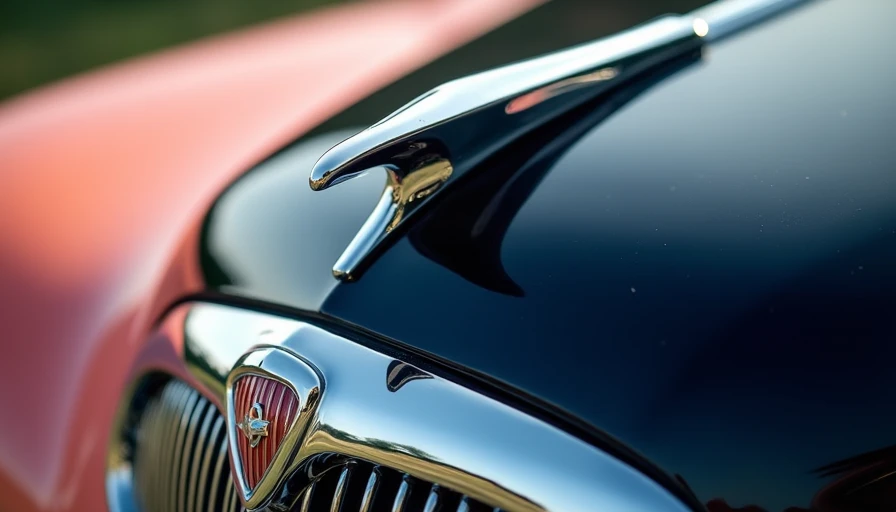
A great car museum does more than park vehicles under lights. It preserves the context in which those cars were born. Among the **best car museums in the world**, few understand this better than the Museo Nazionale dell’Automobile in Turin. Housed in a sinuous modern building, its collection traces the arc of Italian design from the 19th century to today. You do not just see a 1930s Alfa Romeo 8C 2900; you see it against the backdrop of coachbuilding houses, industrial ambition, and the rise of a national style. The museum’s curation feels less like a display and more like a conversation between eras. The cars speak softly, but if you listen, they tell you how a nation forged its identity through rolling sculpture.
Where Design Takes Center Stage
If Turin represents the marriage of engineering and art, the Petersen Automotive Museum in Los Angeles celebrates the visceral power of design itself. Its revolving exhibitions have featured everything from lowriders to Hollywood custom cars, but the permanent Vault is where the **best car museums in the world** prove their worth. Here, among 400 vehicles, you find prototypes that never reached production, one-off coachbuilt treasures, and cars that defined the visual language of entire decades. The lighting is theatrical, but the stories are real. A 1938 Delahaye 165 with Chapron bodywork sits near a 1948 Tucker Torpedo, and suddenly you see how design optimism—or desperation—shapes the metal we cherish.
Museums That Honor Racing Heritage
Speed has its own cathedrals. For those who hear the echo of straight-six howls and V12 crescendos, the Indianapolis Motor Speedway Museum is essential. It holds the Borg-Warner Trophy, the winning cars of nearly every Indy 500, and a quiet reverence for the men and women who risked everything for a lap. Across the Atlantic, the Porsche Museum in Stuttgart strips racing glory down to its essence: clean lines, purposeful engineering, and the obsessive refinement that turns a car into a legend. These are not merely exhibits; they are shrines to the pursuit of a perfect lap, a tenth of a second, a moment of immortality.
Beyond the Showroom: The Experience of Place
Location matters. The Mullin Automotive Museum in Oxnard, California, before its recent closure, was a masterclass in atmosphere—a Deco-inspired building filled with Bugattis, Voisins, and Delahayes. The light, the scent of old leather, the crackle of a restored Hispano-Suiza engine on a quiet morning—all of it conspired to make you feel as though you had stepped into 1930s Paris. The **best car museums in the world** understand that memory is physical. The Citroën Conservatoire in Paris lets you walk among prototypes, commercials, and the raw industrial soul of a brand that dared to be different. You leave not just educated, but changed.
Hidden Gems Worth the Detour
Not every great collection sits in a capital city. The Revs Institute in Naples, Florida, is a private library of automotive history, where cars are displayed not for spectacle but for scholarship. Founder Miles Collier believed that a car’s story is best told through its restoration and its place in the timeline of design. Similarly, the Cité de l’Automobile in Mulhouse, France, houses the Schlumpf collection—over 400 Bugattis, Mercedes, and other European masterpieces—in a vast former textile mill. It is overwhelming, almost too much, but that excess is precisely the point. These hidden gems remind us that the **best car museums in the world** are often the ones you stumble upon by chance.
Planning Your Visit: A Checklist for Enthusiasts
Before you pack your bags, a little preparation can turn a good museum trip into an unforgettable one. First, check each museum’s official website for temporary exhibitions—many rotate their collections, and you might catch a rare display like the Petersen’s “Rolling Sculpture” or the Museo Nazionale’s “Style & Speed” showcase. Second, consider guided tours: the **best car museums in the world** often offer behind-the-scenes access to restoration workshops or vaults not open to the general public. The Porsche Museum, for instance, provides expert-led tours that delve into engineering details. Third, time your visit. The Petersen’s Vault is best enjoyed on a weekday when crowds are thinner, and the Museo Nazionale dell’Automobile sees fewer visitors early in the morning. Fourth, bring a notebook or a camera—but check photography policies; some museums restrict flash or tripods. Fifth, don’t rush. Plan for at least three hours in any major collection. The stories hidden in each car’s provenance—the original owner, the race it won, the decade it defined—deserve your full attention. Finally, combine your visit with nearby attractions: in Turin, the museum sits near the Lingotto building with its rooftop test track; in Los Angeles, the Petersen is on Museum Row next to the La Brea Tar Pits. A well-planned trip lets you absorb the history without fatigue.
What These Museums Reveal About Us
We visit car museums not only to see beautiful machines, but to understand our own relationship with progress, identity, and desire. A 1957 Ferrari 250 Testa Rossa is not just a car; it is a relic of a time when speed had a face and risk had a reward. An early Ford Mustang is a mirror of America’s postwar optimism. The **best car museums in the world** hold these mirrors up, and we see ourselves reflected in the chrome and glass. They quiet the noise of daily life and let us listen to the hum of history. That is why we return to them, again and again, not to check a box but to remember why we fell in love with cars in the first place.